


(0)1622 589 999

info@allfloorstradecenter.co.uk


Are you considering a flooring renovation and wondering what luxury vinyl tiles (LVTs) are and whether they’re right for your property? LVTs combine durability, style, affordability, and low maintenance, making them a decent option for many.
In this article, we’ll explore the types of luxury vinyl tiles, where you can put them, how much they cost, and more!
Before we dive deep into the topic, you can check out our LVT flooring services here!
Luxury vinyl tile is a PVC flooring that mimics natural materials like wood and stone without containing any. It consists of multiple layers of materials, including a backing layer, a design layer, and a protective wear layer.
LVTs are available in both planks and tiles, and they’re resistant to wear and tear signs and water damage. They’re also easy to install and maintain.
LVTs come in four main types: glued, click, tiles, and planks. Here’s a brief roundup of them, along with the most famous LVT effects, styles, and patterns.
Glued LVT flooring needs adhesive for installation. It either comes applied on the back of each tile or not. If the latter is the case, you’ll need to apply it to each tile. It’s thinner than click LVTs and needs a smooth subfloor for proper installation. If the subfloor has any bumps, they’ll appear on the floor once installed.
Glued tiles are more affordable to buy than click ones, but they might cost more money to install. They’re also best suited for moisture-susceptible rooms because they’re more resistant to water than their counterparts.
Click LVTs come in a unique interlocking design that allows for easy installation. You only need to click them into place, and you’re done. They’re usually thicker than glued tiles and require an underlay for more comfort and warmth. While they’re pricey to buy, their installation costs the bare minimum because it’s an easy process.
Click tiles are more prone to water damage than glued tiles. Also, they provide more warmth thanks to the extra sub-layer. These features make them a suitable match for bedrooms, living rooms, and entryways.
Luxury vinyl tiles come in equally sized squares to resemble the appearance of stone, ceramic, or marble floors. They either require adhesive for installation or can be clicked in place, and they’re highly resistant to scruffing and water damage.
LVTs are suitable for various applications, but they’re most famous for use in bathrooms and kitchens.
Luxury vinyl planks come in long rectangles that resemble the appearance of hardwood floors. They’re extremely durable and more resistant to water damage than tiles because they have fewer seams.
Because of their woodsy look, LVPs are ideal for living rooms, bedrooms, hallways, or any place that needs a combination of style and durability.
LVTs come in a myriad of effects that resemble natural floors. Here’s a brief list of the most famous ones:
LVTs are available in many styles to satisfy every taste, most famously the following:
LVTs are either plain or patterned, and they come in multiple geometric patterns that have different effects and purposes.
LVTs cost an average of £15 to £60 per square metre. The cost of mid-quality floors ranges from £15 to £30 per square metre, while high-end floors are usually £40-£60.
That said, many factors can affect this range, including the type of floor you choose, the labour wages where you live, and the brand you buy from.
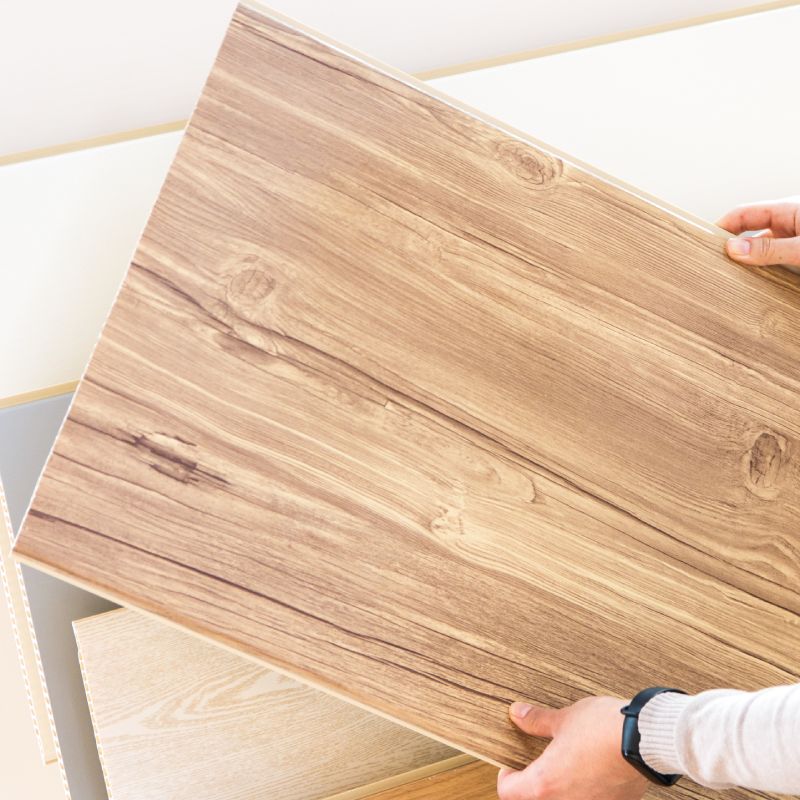
The exact method of installing LVTs may differ according to their type, the condition of the subfloor, and the shape of your room. However, the general idea remains the same.
The first step you should do is measure the room to know how much LVT flooring you’ll need. You can do so by measuring the length and the width of the room, rounding them up to the highest number, and then multiplying them together.
Next, you should prepare the subfloor by cleaning it and making sure it doesn’t have any nails, dirt, or screw heads. If it needs levelling, you should apply the leveller to the subfloor and then prime it to give it a perfect finish.
If your subfloor is uneven, or you want extra warmth and sound insulation beneath your feet, you’ll need to add an underlay before you install the tiles. Underlayments are available in a myriad of types, and you can choose the right one for you by asking the manufacturer which type goes best with your floor.
If your LVTs need adhesive for installation, you should apply it beneath each tile before clicking it down on the subfloor. However, if it’s a click floor, all you need to do is click the interlocking tiles in place. Along the way, you’ll need to cut some tiles to fit into corners, doorways, etc.
LVTs are easy to maintain, and you can keep them looking as good as new for years by following these straightforward steps.
To extend the lifespan of your LVTs, you should clean them properly. Here are the steps you should follow.
If you’re still hesitant about installing LVT flooring, here’s a list of alternatives you should consider.
Luxury vinyl tiles (LVTs) are an affordable flooring option that combines affordability, durability, and style. They’re available in many types, effects, styles, and patterns, leaving little to be desired when it comes to commercial or residential renovation. As a bonus, they’re easy to install and maintain.
If you want to install LVTs in your house or office, get in touch with us today!