


(0)1622 589 999

info@allfloorstradecenter.co.uk


No one wants flooring that undermines their place’s aesthetic appeal or that’s too difficult to maintain. For that reason, laminate flooring is many people’s go-to option. But do you need underlay for laminate flooring?
The short answer is yes. But, of course, you might want to know why you need it, how it works, and how to choose the best underlay for laminate flooring. So, tag along to find that out and more.

What do you put under laminate flooring? In short, you put underlayment. This padding under laminate flooring is a slim layer of spongy, closed-cell plastic foam sheet. It separates the subfloor from laminate flooring, and you can buy it in rolls.
However, laminate flooring may have pre-attached underlayment with each plank. If you purchase laminate flooring with attached underlayment, you won’t need to add underlay. Not only is it unnecessary, but it can destabilise your flooring. Otherwise, laying laminate underlay is necessary if your laminate flooring doesn’t have underlay.
There are several facts that answer the question: “does laminate need underlay?”
You may wonder: “What does underlay do?”. Laminate underlay allows your flooring to expand and contract over the subfloor. To illustrate, laminate flooring, a wood product, expands based on the temperature. The underlay can keep up when it does, protecting your flooring and avoiding warping.
It would help if you also had underlayment because it reduces noises. In other words, it absorbs the noise caused by footsteps and movement, preventing it from transferring to the floor.
Another benefit of underlayment for laminate flooring is insulation. Typically, laminate contributes to a cold floor surface, which is only made worse by a cold floor surface. But the underlay offers some insulation. This insulation is especially crucial if you haven’t installed underfloor heating.
Tip: A piece of laminate underlay advice is to look for laminate underlays with high tog ratings or R-value to generate more heat, ensuring a warm underfoot.
As we’ve mentioned, high tog ratings in underlay enable it to act as an insulator. But what if you already have underfloor heating? What underlay for laminate do you use, then?
We’d recommend thermal underlay with a low tog rating. This way, more heat can penetrate the laminate flooring to the room. And the thermal underlay can contribute to a reduced energy bill.
You can ensure better air quality by installing the best underlay for wood flooring, particularly laminate flooring. This change in air quality won’t be evident at first, but it’ll be in time. Moreover, the engineered wood flooring underlay will absorb the harsh smell (emanating from under the subfloors) that you’ll notice right after installation.
Underlay can help with moisture damage control. If you have wood, cement, concrete, or other cold subfloors, you’ll need a damp proof membrane. So, an underlayment with a vapour barrier can protect your laminate flooring against moisture damage.
Not to mention, spots without automated climate control, such as crawlspaces, are especially prone to moisture. So, a moisture-resistant underlayment will come in handy. This will protect your laminate and prevent structural damage.
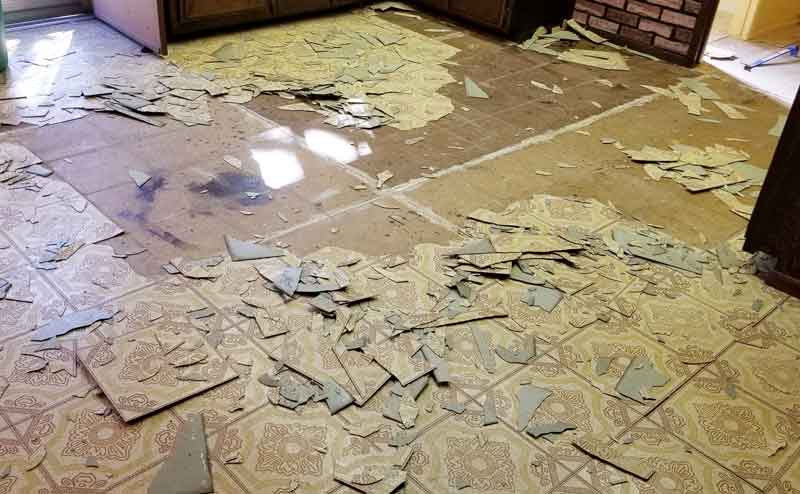
There are two processes that explain how underlayment for laminate flooring works. For one, underlay offers you optimal acoustic performance. Also, it removes any minor deviations in the subfloor.
You choose what goes under laminate flooring based on the features you need, whether that’s sound dampening, moisture, insulation, or else. Here are the available underlay types on the market and what they excel at:
Wood subfloors are composed of wood layers or particles bonded together using glue or pressure. They’re typically durable, rendering the standard underlayment suitable. After all, wood should be able to breathe, and a vapour barrier can obstruct that.
Cement subfloors require vapour underlayment, which has effective moisture retention capabilities. This way, the moisture won’t seep into it through its big pores. For a cement subfloor, you can choose cork, felt, or vapour underlayment.
If there are bumps or creaking sounds in your subfloor, opt for underlayment with noise transfer reduction and cushioning. For instance, cork is known for its sound insulation and moisture resistance.
The floor underlayment thickness will differ according to the underlayment classification. Let us explain:
Tip: If you want our laminate flooring underlay advice, don’t use a thick laminate flooring underlay over 5 mm, as it can be problematic for the laminate locking system.
But what if your laminate flooring is 12mm? Would you need an underlay, then? Unfortunately, 12mm is still thin and prone to damage. So, it’s recommended to use an underlay if you want to extend its lifespan.
As for 8mm laminate flooring, it has the appearance and texture you want. Of course, you can install it in your bedroom, sunrooms, sewing rooms, even office, and practically anywhere. Still, that doesn’t negate the need for underlay flooring.
Overall, the underlayment rolls tend to be about 0.9m wide and 9.1x30m long. As for the common question of “How much underlay do I need for laminate flooring?, you can refer to this comprehensive guide.
As we’ve said, underlay is crucial in maintaining the structure and stability of your flooring. Without underlay, your laminate flooring, a floating surface, won’t be able to float. As a result, it may suffer damages.
If you have a concrete subfloor, you should use a laminate underlay for concrete floors to avoid the floor being uncomfortable. After all, an underlay adds that comfortable underfoot. Similarly, a wood subfloor requires an underlay because it isn’t moisture resistant.
You might ask, “Does all laminate flooring need underlayment? So, let’s cover various types of acceptable underlays.
So, can you use carpet underlay for laminate flooring? No, you need to remove the carpet or carpet pad before installing laminate flooring.
Another question you may have is: “Can you lay laminate over carpet underlay?” And it would be best if you didn’t reuse your carpet underlay with laminate floors either.
That’s because a carpet underlay’s thickness ranges from 8mm to 10mm. Accordingly, it’s a lot thicker than most laminate underlays. And it’ll make the floor too spongy and bouncy, ruining the flooring’s locking system. Not to mention, it can void your warranty.
Yes, felt paper underlayment can be installed under laminate flooring, and it’s the most inexpensive option out there. It has sound and moisture reduction capabilities, but its cushioning and insulation could be better.
It depends. You can lay laminate over laminate as long as it’s smooth and level. However, if your existing laminate has bumps and imperfections, it should be removed.
Overall, you can lay new flooring over existing flooring if it’s uniform and smooth. Examples include vinyl, concrete, tile, and plywood flooring. So, you can install an underlay for laminate on floorboards.
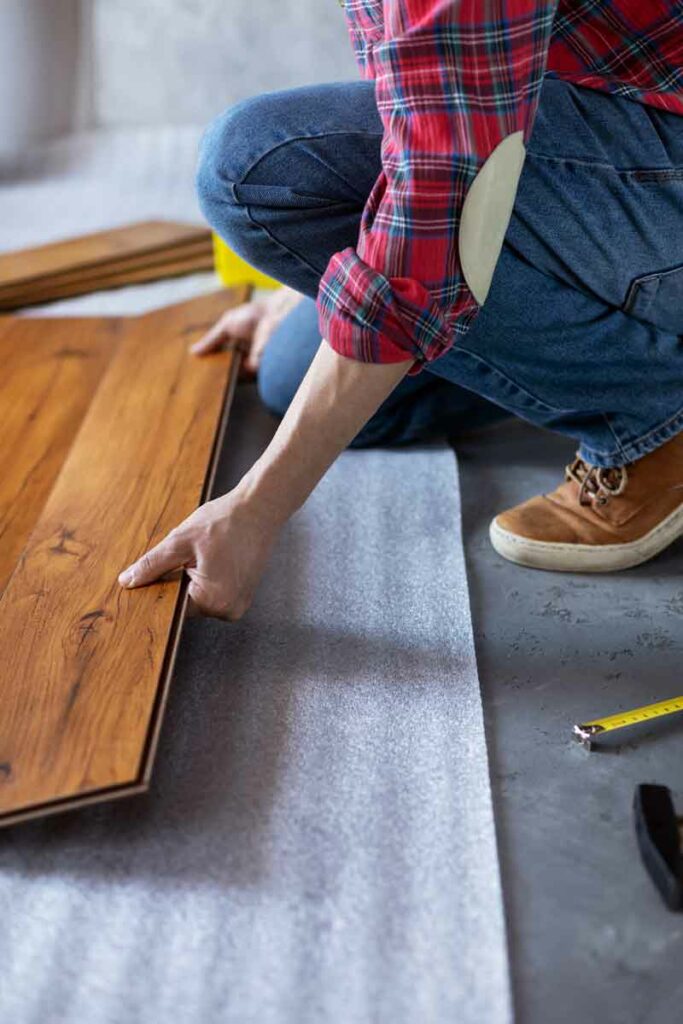
The first step in how to lay underlay for laminate flooring is to prepare the subfloor. To illustrate, you need to clean it, vacuum it to remove debris, dirt, and dust, and remove any remaining nails or staples. Also, check out our floor cleaning and maintenance tips for top-notch cleanliness.
After cleaning the subfloor, level it out by repairing cracks and holes (as much as possible). Make sure that it’s dry before proceeding with the next step.
Afterwards, you can install the underlay throughout the room, but leave at least a 10mm gap around pipes. As for the installation methods, they differ according to the underlay type you choose.
Firstly, foam underlays are easy to lay. All you have to do is:
Secondly, foil laminate underlay requires correct installation if you want its full benefits. Accordingly, you should:
Thirdly, fiberboard is very easy to insert. You need to:
There are types of laminate flooring and underlay designed to work with underfloor heating.
Whether you have safety flooring or other types, picking a product that works with underfloor heating will enable your underfloor heating system to work to the best of its abilities. That’s because these thermal underlays have low tog ratings. In other words, they permit more heat.
There’s no shortage of underlays on the market, but here’s our recommended underlay for laminate flooring. Duralayoffers quality laminate underlay with optimal durability. They’re more suitable if you’re getting professional installation. And if you’re looking for specific recommendations, check out Duralay’s Heatflow Wood & Laminate under flooring product.
Another excellent brand is B&Q. It has some budget-friendly options. For instance, you can consider the Diall 2mm Foam Laminate & Solid Wood Flooring Underlay Panels. This underlay is arguably perfect for underfloor heating.
Last but not least, Wickes DIY is a top-rated UK brand. Its Wood FIbre Laminate & Wood Flooring Underlay has impressive sound isolation qualities. Moreover, it ensures a comfortable underfoot. It’s certainly on our list of the best underlay for laminate flooring.
Prices vary according to various factors, such as thickness, insulation, sound isolation, and more. Overall, you can buy engineered flooring underlay for about £15, and the price can go up to over £40.
Ultimately, installing an underlay is necessary if you want your flooring protected and comfortable, so you need to decide on the type of underlay to use. Think of the features that matter to you the most, such as comfort, durability, sound isolation, insulation, and so on.
After all, your choice to use laminate flooring probably had something to do with its easy maintenance and aesthetic appeal, and underlayment allows you to enjoy those perks for the longest time.