


(0)1622 589 999

info@allfloorstradecenter.co.uk

Are you contemplating a revamp of your commercial property floors? If so, commercial LVT (Luxury Vinyl Tile) flooring might just be the ideal solution. Noted for its balance of aesthetics, durability, and economic value, it's a popular choice for business owners across the UK looking to upgrade their premises.
Whether you're planning to buy, install, or maintain commercial LVT flooring, this guide is here to help. We'll explore the different types and styles and tell you how to care for them.
Before we dive in, if you want to explore high-quality flooring services, check out our options at All Floors Trade Centre, the go-to place for all your commercial flooring needs!
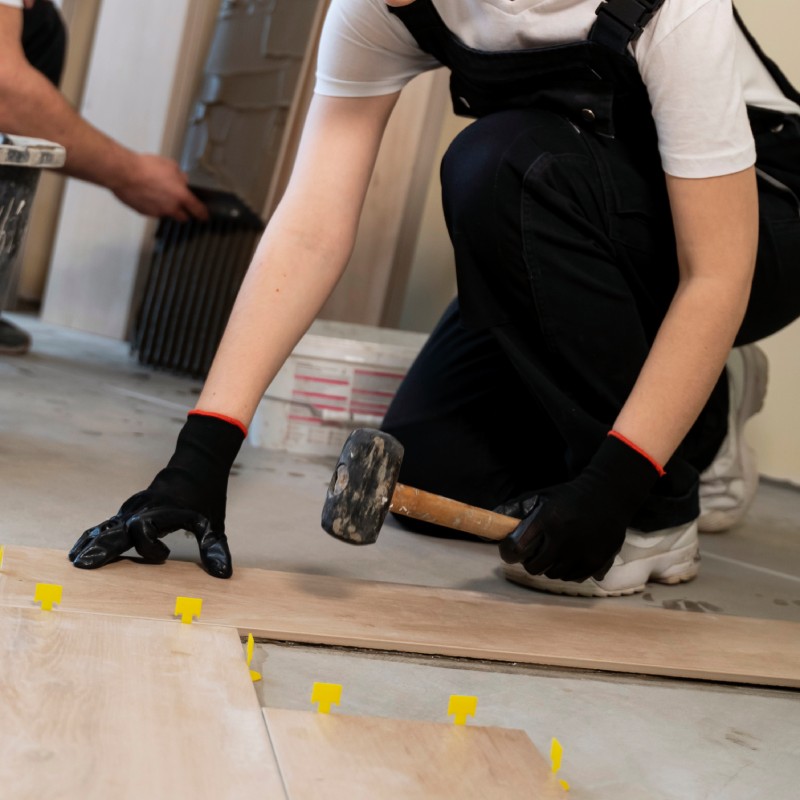
Yes! Commercial LVT flooring is a standout choice for many commercial properties due to its unique blend of affordability, ease of maintenance, and aesthetics. It's also known for its robustness, as it can withstand high traffic, making it ideal for places like shops, offices, or restaurants frequented by numerous people daily.
Finding the right commercial LVT flooring is now a breeze due to the variety of types available on the market. Here are the three main types you'll find, along with their pros and cons.
Glue-down LVT flooring involves adhering the tiles directly to a prepared subfloor using a special adhesive. This method offers a highly stable and secure flooring solution. All in all, glue-down LVT flooring is ideal for high-traffic areas and commercial spaces where stability and durability are crucial.
Also known as "floating" LVT flooring, click-lock tiles are designed to fit together securely without the need for adhesive. The tiles have special designs that "click" into place like a puzzle, forming a tight bond. This LVT flooring type is relatively easy to install and replace if needed, making it a popular choice for businesses that desire flexibility and ease of use.
Loose-lay LVT flooring is the easiest to install. These tiles are laid down without adhesive or locking mechanisms. Instead, they rely on their weight and friction against the subfloor to stay in place. They're perfect for temporary spaces or areas where you may want to change the flooring frequently.
Despite the ease of installation, loose-lay LVT still offers the durability and stylish appeal of other LVT flooring types.
One of the best features of commercial LVT flooring is its versatility in style. Whether you're after a contemporary look or a classic aesthetic, you'll find a style that suits your needs. Below, we explore some common styles.
LVT tiles come in equally sized, square shapes that emulate a range of materials, from ceramic and stone to abstract prints. They provide a clean, fresh look that is perfect for modern business environments. Tile LVT flooring is also an excellent fit for those aiming for a minimalistic interior.
Plank LVT flooring is designed to imitate a variety of hardwoods, like oak and maple, offering a warm and inviting look to any space. It comes in equally sized rectangular shapes that are installed using adhesives or the clicking down mechanism.
For businesses looking to make a statement, patterned LVT flooring is the way to go. These floors incorporate unique designs, ranging from geometric patterns to intricate mosaics, making them an attractive focal point in any commercial space.
Wood-look LVT flooring is a popular choice for commercial spaces seeking an elegant, timeless look. It successfully captures the natural beauty of wood while offering the durability and easy maintenance of vinyl.
Stone-look LVT flooring imitates the earthy charm of stone tiles like slate or marble. It's an excellent way to introduce a natural element into the interiors without worrying about the maintenance typically associated with stone flooring.
Textured LVT flooring adds depth and character to commercial spaces. These floors are designed with a tangible grain or groove pattern, providing an authentic look and enhancing slip resistance – an essential feature for commercial areas.
Fitting commercial LVT flooring is a relatively straightforward process, although it requires careful planning and precise execution. Here's a general outline of the steps involved.
First, you should clear the space where you'll be installing the flooring. Remove any existing floor coverings, furniture, and obstacles.
The subfloor needs to be flat, clean, dry, and free of any debris before you install the new floor. Any unevenness may show through the LVT flooring over time, so it's crucial to level the subfloor if it's bumpy.
Accurate measurements are key to avoiding wastage or shortage of material. Consider where you'll start and end and the direction of the tiles or planks. You can measure the room and get its accurate square footage by multiplying its length and width.
The new LVT tiles should be cut to accommodate the room's fixtures, edges, and corners. You can cut them to fit using a utility knife and straight edge.
The LVT installation process differs depending on the type of flooring you choose. For glue-down tiles, an adhesive is spread on the subfloor before the tiles are placed. As for click-lock tiles, they're positioned and then locked together. Finally, loose-lay tiles can simply be laid down in the desired pattern.
Once all tiles are installed, you should roll over the floor with a flooring roller to ensure good adhesion and to remove any air bubbles.
Please note that while it's possible to fit LVT flooring as a DIY project, it may be best to hire a professional to ensure the fitting is done correctly and to achieve the best finish. Many companies, like All Floors Trade Centre, provide professional fitting services to take the hassle out of your flooring project.
Maintaining LVT flooring is a relatively straightforward process and can be carried out with simple steps. Following a regular cleaning and maintenance routine will ensure your floor stays attractive and durable for years to come. Here's a handy checklist you can follow.
Yes, commercial LVT flooring is effortless to maintain. The reasons for this are the durability of the material and its resistance to stains and spills.
Simple cleaning routines like sweeping, spot cleaning, and occasional deep cleaning are enough to keep LVT floors looking their best. On top of that, their resistance to wear and tear reduces the need for frequent repairs or replacements.

The cost of commercial LVT flooring can vary depending on the type, style, and size of the space. Here's a breakdown of the costs you should expect if you install a new LVT floor.
The material cost of LVT flooring typically ranges between £20 to £50 per square metre. Remember, this number can vary depending on the quality, brand, and style you choose. More intricate designs or styles that mimic high-end materials like marble or exotic wood can cost more.
In terms of installation, the costs can also fluctuate based on the complexity of the process and the rates of the professionals you hire.
On average, for a professional installation, you should expect to pay between £15 to £25 per square metre. This cost includes preparing the subfloor, fitting the new LVT flooring, and finishing. However, it can go higher if the existing floor needs to be removed or the subfloor requires additional preparation.
Generally, it's always wise to request a complete quote before proceeding with the project to avoid any hidden costs or surprises further down the line.
Here are some of the most common and highly recommended flooring types for commercial spaces.
Remember, the best flooring option for your business will depend on your personal preference, the nature of your business, and your budget. It's always best to speak to a flooring specialist if you don't know which type to go with.
Choosing the ideal flooring for your commercial space is an essential step in creating an attractive and functional work area. Taking into account the durability, versatility, and practical maintenance of LVT flooring, it's clear why this option is so famous for businesses across the UK.
Whether you prioritise ease of maintenance, affordability, or durability, commercial LVT flooring ticks all these boxes superbly. It's also easy to fit and comes in a wide range of patterns and styles.
If you feel like you've found the best flooring option for your specific needs, reach out to us at All Floors Trade Centre, and we'll help you navigate the range of LVT flooring styles and types!
When exploring different types and materials of flooring, carpet coverings stand out. Their designs, patterns, and textures are limitless, and the qualities they bring to the table meet nearly all requirements.
We'll take you on a tour of the various carpet types and applications to help you find the right carpet for you!

Carpets are thick floor coverings typically made of woven natural or synthetic fibres. They extend throughout the entire space and are fixed in place.
Carpets come in a wide range of shades and styles, and their various types serve different purposes. Some are used for their soft underfoot feel, while others are used for their stain-resistant properties, and so on.
Yes, carpeting is a popular flooring type. Statistically speaking, consumer spending on carpets in the UK jumped by over a million pounds in just one year, from 2020 to 2021.
People worldwide love this floor covering because of its unique features. For instance, it’s an inexpensive flooring option that offers great insulation during the colder months.
You should consider a few crucial aspects when selecting the best carpet for you. One of the first things that'll help you narrow down your options is your budget. Then you’ll need to compile the qualities you want in a carpet and choose a type and material accordingly.
Aesthetics will also play a major role in your decision, as the carpet needs to complement the interior decor of your space.
To help you in navigating the world of carpets, we'll walk you through the popular types of this flooring material, explaining their uses, benefits, and drawbacks:
Twist pile carpets are made by twisting short fibres tightly and threading them through the carpet backing. This results in a sturdy, dense pile that feels firm underfoot.
This carpet type is ideal for high-traffic areas such as stairs and living rooms because it's quite resilient and low-maintenance.
The Saxony pile is a cut-pile carpet with fibres loosely twisted and woven into the carpet's base. The strands are mid-length and extremely dense, giving the rug a fuzzy appearance and a plush feel.
Because the Saxony carpet fibres are easily crushed, they're best used in low-traffic areas like bedrooms or dining rooms.
Berber carpets, also known as loop pile carpets, are made of fibre strands looped through the carpet backing. These loops are embedded into the carpet's surface to create a textured, firm feel underfoot.
Thanks to their remarkable endurance, you can install the Berber varieties in areas subjected to a high volume of footfall.
Frieze carpets are distinguished by their tightly curled, long, and dense fibres, which closely resemble the perm hairdo! These fibres protrude from the base in an irregular pattern, giving this carpet a more casual style.
This carpet type is commonly used in commercial settings because of its fibre’s durability and ability to bounce back. It also works great in domestic areas receiving high foot traffic, like hallways and living rooms.
As the name suggests, the cut and loop carpet is a hybrid style combining cut or protruding fibres with looped ones. This type is also known as patterned carpet and is widely loved for its distinctive abstract and geometric patterns.
To keep this carpet looking fresh, use it in areas with the least amount of foot traffic. Otherwise, it'll quickly appear worn out.
Wilton is one of the oldest and most elegant carpet weaving styles! This carpet is primarily made of wool and is available in cut piles, loop piles, or a combination of both. You can find them in either plain warm colours or with a unique posh design.
Wilton carpets, particularly the higher-quality ones, are made to last. You can use them in any room you want to add a touch of luxury to, whether it gets a lot of traffic or not.
Velvet weaving is a type of Wilton carpet, so they share many characteristics as well as the benefits, drawbacks and uses listed above.
These carpets have a short and densely packed pile that gives the surface a rich, smooth look. It used to be made entirely of wool, but now a few synthetic materials are mixed in.
Axminster carpets are named after the town of Axminster, England, where their original production facility was located in 1755. Although the factory closed, the Axminster weaving technique continued to carry the epitome of royalty.
These carpets closely resemble French Savonnerie carpets with their short strands and floral or oriental patterns.
This type is incredibly hard-wearing, but its luxury designs are better suited to formal spaces like drawing rooms where they can be admired by visitors.
Carpet tiles, as the name implies, are floor coverings made of fabric, usually synthetic, in the shape of square or rectangular tiles. You can install them on different floors, including concrete and wood.
These tiles come in two varieties: non-adhesive, which requires glueing, and adhesive, which you can peel and stick.
Carpet tiles are a perfect match for commercial buildings like offices due to their durable characteristics and professional-looking appearance.
Now, let's take a closer look at the seven most widely used materials in manufacturing carpets:
Wool is one of the most expensive natural materials used in carpets. Aside from being the definition of luxury, pure wool is enduring, stain and dirt resistant, soft to the touch, and provides unmatched warmth. That's why wool carpets look and perform brilliantly in almost any setting!
Be aware that this material doesn't fare well in high-humidity environments and can develop mould.
If you want the exceptional qualities of wool at a lower cost, nylon is your best bet. But it's worth mentioning that it's not as soft as wool and other synthetic materials. This man-made fibre is incredibly resilient, easy to maintain, and resistant to stains and mould growth.
Nylon carpets are available in a variety of types and properties, so there is one for every application!
Polyester is a worthy synthetic opponent to nylon; it costs less and still has excellent properties! This material is quite soft and retains dyes better than most synthetic fibres on the market. You won't have to worry about the colours fading over time!
Polyester carpets are better suited to low-traffic areas because their fibres compress easily.
Polypropylene or olefin is a synthetic material mimicking wool. It has some wool qualities, such as softness and stain resistance.
Although olefin is sturdy, it's not as long-lasting as other materials like nylon as it's prone to flatten under objects and footsteps. As a result, it should be installed in areas with low traffic.
Acrylic is another wool substitute used in carpets; it's quite smooth to the touch and has a similar appearance. It's also stain, moisture, and mould resistant!
Acrylic carpets are affordable, but to keep them as long as possible, they should be subjected to minimal use; if not, they'll wear out quickly.
Along with wool, other natural fibres are used in manufacturing carpets. Some popular examples include Seagrass, jute, silk, and sisal. Their price ranges vary, but they all share exceptional endurance!
You can place these carpet types in busy areas. However, before putting any of them in a wet environment, make sure to check their moisture resistance level as most natural materials can grow mould.
Blends are varieties created by mixing more than one fabric. This is done primarily to combine the useful properties of different materials or to reduce the cost of high-end fabrics.
Wool-nylon and nylon-polyester are two common carpet blends. The percentage of each fibre present determines a carpet's overall properties and, thus, its application.
There are several styles you can choose from, each of which enhances the visual appeal of specific settings.
If you're a fan of minimalistic designs, then a simple, solid-coloured carpet is the way to go! This style is timeless and gives a sleek feel to any space.
Plain carpets are suitable for any setting, from living rooms to offices; just make sure to pick hues that blend in with the interior.
If you want a floor covering with more personality, look no further than the patterned carpets category. Whether you prefer geometric, motifs, or intricate designs, you'll find something to your liking.
This style looks wonderful in formal areas like dining rooms or serving as a focal point in a less busy space.
With horizontal or vertical stripes, this carpet style is a go-to for adding visual effects; it creates a sense of elongation and can make a room appear larger.
Horizontally striped carpets are ideal for making narrow rooms and hallways appear wider. Whereas vertically striped rugs are a classic for staircases as they create the illusion of long stairs.
Textured carpets have fibres at different levels on their surface to add depth and dimension. This variation in height does an amazing job of hiding dirt and footprints, making this style ideal for busy spaces such as living rooms.
This is a Berber carpet style that features loops of varying heights. This sculptured pattern adds texture and durability to the carpet, which makes it a terrific choice for high-traffic areas like corridors and commercial spaces.
Made from natural fibres of agave plant leaves, sisal carpets are a great way to create a rustic or tropical atmosphere.
That’s why they're commonly used in coastal or beach-themed interiors and can be used in living rooms or bedrooms. But you should note that they have a firm feel underfoot.
Wherever comfort is prioritised, there are the shag carpets. This style is distinguished by its long, fluffy fibres, which exude cosiness and elegance in any space; however, it doesn't withstand heavy traffic. This makes it a perfect fit for areas like bedrooms and lounges.
For extreme softness and a touch of luxury, shop in the plush carpets section. This carpet has a uniform, dense pile with a velvety texture, giving it a smooth appearance and making it super comfortable to walk on. It works well in low-activity settings craving a posh vibe.
There's no one best colour for carpets, but there are some guidelines to help you choose the right one:
As you choose the right flooring for your property, you'll discover that carpeting is an option that works well in almost all settings. It offers plenty of options for residential and commercial buildings:
Some carpets are more efficient than others in different rooms and areas of your home:
Staircases and hallways are heavily trafficked areas of the house. So it's better to prioritise durable types, fibres that can bounce back from constant stepping, and darker colours.
Nylon or wool twist and Berber carpet types are fantastic choices for these areas.
For a space where comfort and noise-isolating qualities are required, high-pile carpets are the perfect solution. That's why plush and frieze carpets are among the most popular styles in bedrooms. Make sure to get them in wool, olefin, or other soft-to-the-touch fibres.
Although resilience is a crucial consideration for living rooms, especially in busy households, cosiness is equally important.
Choose frieze, twist, or any textured carpet to hide signs of wear while also being comfortable to step on. Wool is the best fibre in this regard, but you can go for wool-nylon blends for cheaper rates.
Commercial properties, like retail stores and medical facilities, require carpeting that'll last for a long time without looking deteriorated.
The flooring will be subjected to various elements, such as a high volume of footsteps, spills, heavy objects, and so on. Thus, longevity, high endurance, and stain resistance are among the top qualities to look for in carpets for this property type.
Offices are one of the commercial spaces that carpeting works well with. Although it depends on the office style and layout, carpet tiles are generally the best option.
You don't have to use an expensive material, but it shouldn't be super cheap, either. To ensure you get a long-lasting floor covering, stick with nylon varieties.
We've created the following table to help you get an overall idea of the benefits to expect and drawbacks to be aware of when opting for carpets:
| Upsides | Downsides |
| Provide optimal insulation and effectively trap heat in spaces, resulting in lower energy bills. | High maintenance as they require regular cleaning to stay fresh and stain-free. |
| Comfortable and safe to walk on as they’re soft and non-slip, which is especially important when children are present. | Wear out over time and need to be replaced, unlike wood flooring, which can last up to 100 years. |
| Superior for dampening impact sound, which occurs when an object impacts another, such as the sound of our footsteps. | Exacerbate allergies, particularly the high-pile varieties, because they trap dust, pollen, and other allergens. |
Numerous flooring brands in the UK sell various types of carpets; some even specialise solely in them. Here are the top names that have long dominated the market with their high-quality and diverse products:
You can get a carpet for as little as £5/m2 or as high as £100/m2. Carpet prices vary greatly depending on several factors, the most important of which are the type and materials used.
There are a few pointers to keep in mind when looking for cheap carpets to ensure you get good quality.
First, look for carpets made of reasonably priced synthetic materials like polyester and olefin; nylon is the most expensive. Then, choose a type that's both inexpensive and long-lasting, such as Berber or frieze; avoid cut and loop as well as velvety piles.
When it comes to luxury carpeting, the materials used and the level of craftsmanship are everything.
Opt for high-quality natural materials like wool or silk for their durability, softness, and distinct poshness. Velvet and Axminster carpets are the types to look for. You should also evaluate the carpet's density, as denser piles are more resilient and last longer.
Many variables influence the price of installing carpets, including the space size and labour time. We could say that the average installation cost ranges between £4 and £6/m2.
Carpets can boost the value of your property, but only under certain conditions.
Wool carpets are your best bet if you want to increase the desirability of your home; they're renowned for their luxurious feel and exquisite features. Try to stick with neutral colours so they can accommodate different tastes.
You should also remember that while having carpets installed only in areas where comfort is prioritised is a plus, having them installed everywhere isn't.
To get a better understanding of the carpet installation process, check out the three major steps involved:
Begin by thoroughly cleaning the floor surface where the carpet will be installed, removing any dirt, debris, or old adhesive. This provides a clean and level foundation for carpet installation. Remember to let the floor dry completely before proceeding with any further work.
Place the carpet grippers around the perimeter of the room, making sure they're securely attached to the floor. Next, lay the underlay over the entire floor area, cutting it to fit and joining any seams as necessary.
Roll out the carpet over the underlay, aligning it with the room's walls; allow for extra carpet fabric at the edges to trim later. Then, use a knee kicker or power stretcher to stretch the carpet and hook it onto the grippers. Finally, trim off the excess fabric and secure it along the edges.
Yes, you should always use new underlay and grippers when installing any carpet. They play a significant role in holding the carpet in place while maintaining a smooth surface free of bumps.
It’s better to leave it to the experts to save time, money, and effort.
While it's possible to fit a carpet yourself, it's recommended you hire a professional, especially if you've never done so before. From taking measurements to cutting to installing, the process can be challenging for beginners and sometimes even costly if the results aren't favourable.
If you're thinking about getting a carpet or already have one, here are some basic care and maintenance tips to help them last as long as possible:
Carpets can last anywhere from 5 to 15 years, depending on various factors, some of which include:
Yes, carpets are an energy-efficient flooring option that can help you save money on your energy bills! Their fibres are excellent insulators with low heat conductivity, and they also capture heat, which boosts the thermal insulation in your property.
Natural fibre carpets, such as pure wool, sisal, and seagrass, are the most environmentally friendly options because they’re renewable and biodegradable.
Contrarily, synthetic fibres require significant amounts of energy for their production and can take hundreds of years to degrade.
Yes, overall, carpets are an amazing flooring choice! They fit a wide range of budgets, tastes, and requirements, and they have brilliant qualities like noise reduction and insulation. Good quality varieties will also likely increase the value of your property.
Carpets aren't the best choice for a household with pets for a few reasons, including the infamous pee accidents and clawing.
If you intend to install them, make sure to get varieties made of stain-resistant synthetic materials, like nylon. You should also avoid types that snag easily, like Berbers.
Yes, this flooring type is ideal for families with children because the layer of padding it provides makes falls more gentle, and it's also non-slip. However, because spills are likely to occur with kids around, the carpets will require regular maintenance.
Yes, adding carpets to high-traffic areas is a great idea. They're quite resilient and reduce the noise of footsteps and other object impacts, which is why you'll find them in many airports! It all comes down to choosing a long-lasting material and a durable style.
When shopping for carpets, your options are endless. You just need to choose the material, type, and style wisely based on your property type and intended use.
It's also critical you get your carpets from reputable suppliers and have them professionally installed so you can enjoy all their fantastic features.
At All Floors Trade Centre, we have a high-quality carpet selection and experts to fit it for you; call us today, and we'll help you transform your space!
Are you renovating your business place and want a detailed introduction to the world of commercial flooring? Perhaps it’s your first time dealing with a renovation project out of your house, and you want to explore new options. Whatever you want to know, you’ll find it here!
To help you find the best commercial flooring out there for your place, we’ve prepared a comprehensive guide on their types, where they fit best, and what their main advantages are.

Commercial floors are designed specifically to fit in business places, like offices, sports facilities, hotels, shops, schools, and overall industrial areas. For this reason, they’re made with durability and strength in mind, while aesthetics take a step back.
This feature makes commercial floors different from residential ones, as the latter is made with appearances as the top priority. That said, nowadays, commercial floors come in all shapes and patterns to satisfy all tastes, so you don’t necessarily have to sacrifice looks for practicality.
Commercial floors have an unwavering appeal in the renovation business, and for all the good reasons. Here’s a list of what makes these floors a perfect option for your place.
Commercial floors are designed to withstand heavy foot traffic, which means they’re safe for all employees, no matter what their job nature is. Most importantly, they’re manufactured to resist slipperiness, which drastically reduces the risk of falling and tripping.
It’s no secret that commercial floors are more durable and have longer lifespans than most residential floors. This is because they serve more heavy-duty roles, withstanding years of heavy machinery and constant foot traffic.
To put things into perspective, concrete floors, the most famous commercial type on the market, can last up to more than 50 years with proper care and maintenance. On the opposite side, famous residential floors like wood and marble rarely last more than 25 years.
Since commercial floors rarely need replacement and can handle harsh conditions for a long time, they make for increased productivity. You’ll rarely have to close your business and give your employees a few days off to repair a damaged floor or replace yours with a new one.
Most commercial floors, like rubber, laminate, and LVT, require easy care and maintenance. The most you’ll have to do is the regular sweeping and vacuuming and occasional professional cleaning sessions.
Many types of commercial floors, most famously rubber, can absorb sounds. This feature makes for ideal working environments, especially in busy places with the likelihood of making a loud noise. An example off the top of our heads is the gym.
Gyms are always bustling with heavy-weight lifters and rope jumpers, which can make for an unbearable working environment. Luckily, these types of floors come to the rescue with their absorbing capabilities.
The muffled noises, increased safety, and ease of maintenance of commercial floors make for better working conditions all around. They’re the right choice for most business facilities, no matter what the nature of the work is.
Here’s a list of places you can install commercial flooring:
The best floors for offices are carpet, wooden, and LVTs because they strike a perfect balance between style, durability, and practicality.
Wood and stone floors are a suitable fit for shops because they give off an aura of elegance and warmth, and they’re durable enough to withstand foot traffic.
Rubber floors are the best choice for sports facilities because they absorb impacts and noise, making for enhanced safety and practicality.
Vinyl floors are suitable for schools because they’re resistant to many types of damage and aren’t as tough as concrete and resin in case of falls.
Carpet and wood floors are perfect for hotels and motels because they’re comfortable, warm, and elegant.
Concrete and resin floors are ideal for industrial spaces and factories because of their unprecedented strength and durability.
Here’s a detailed rundown of the most famous types of commercial floors!
Concrete floors are made from large flat slabs of concrete, and they can be precast in a different area and installed right away or prepared and poured on your business site.
They’re famously associated with commercial areas because of their unprecedented durability and strength. They can take heavy machinery and vehicles all day long without an issue. That said, they don’t offer much in the looks department.
Resin floors are made from a mix of heavy-duty plastic and a hardener material, resulting in an extremely strong surface. They’re mostly associated with commercial and industrial areas because they’re affordable and offer decent durability. However, they’re less famous in the residential renovation business because they’re not aesthetically appealing.
Vinyl floors are synthetic floors made from multiple layers of materials. They provide durability, affordability, and good looks. They’re ideal for commercial areas where looks are an important factor, like offices, conference rooms, and meeting rooms. Best of all, they come in a myriad of finishes, including ones that mimic natural materials, without hefty price tags.
Carpet floors are different from all the other types because they’re made of soft textiles and materials, making them ideal for spaces where warmth and comfort are a requirement. They’re best suited for places with delicate foot traffic, like offices, because they can’t take heavy machinery and equipment.
Wood floors are one of the most durable and elegant types on the market. They come in endless shapes and types, including hardwood and engineered wood. These floors are an ideal choice for the hospitality industry because of their beauty and practicality. You’ll also commonly find them in offices and meeting rooms.
Laminate floors are manufactured from multiple layers to enhance their durability, including a base layer, an image layer, and a wear layer. They’re one of few commercial flooring types that strike a balance between aesthetics and practicality, and they have an average lifespan of 15-25 years.
Rubber floors are either made from natural tree rubber or recycled tires and sports equipment. They absorb shocks and noises well, making them ideal for sports facilities. That said, they’re also famous in hospitals because they’re highly durable and resistant to water, fire, and slips.
LVTs come in both tiles and sheets, and they’re manufactured specifically to mimic natural materials like wood and marble. They’re made from multiple layers of materials, which enhances their durability and makes them resistant to water and scratches. Best of all, they’re one of the easiest floors to install and take no time.
If you’re having a hard time choosing the right floor for your property, here’s a list of situations that need specific flooring and the best types for them.
The best floors for heavy traffic areas are unarguably concrete and resin. They’re both strong enough to take heavy traffic, including people and warehouse vehicles, for a long time without suffering any type of damage.
If your floors are regularly exposed to water, you’ll be better off with waterproof floors like vinyl and LVT. You also have stronger options, like concrete and resin, if you work in a heavy-duty, industrial area.
If you work in an extremely hot environment, you’ll need a floor that’ll take the extra heat without melting or denting. Also, some floors have a cooling effect, which is a huge bonus.
The most famous floors for these environments are porcelain and concrete. You can go for the former if you’re looking for a cooling effect without spending extra money on an AC or the latter if you prioritise practicality and strength.
The best floors for heavy machines are concrete and resin. They’re the strongest materials on our list, and they never show dents or signs of wear and tear because of heavy furniture and machines.
A commercial flooring contractor is the person or company you hire for installing new floors or repairing existing ones. They can also give you advice on what types of floors to install in specific environments.
To keep your floors in the best condition possible, you should follow these steps:
Industrial settings are often full of dust and dirt, so it’s best to mop the floor two to three times daily. You can use a soft mop and some water without detergent or a dry mop for the loose dirt.
Heavy machines are common in commercial and industrial settings, but they can have destructive effects on floors, especially if dragged around. Ideally, you should only roll them using wheels or carry them over the floor.
Some spills cause irreversible stains on the floor if left untreated, especially acidic chemicals. If you don’t clean spillages right away, you might notice some discolouration or fading colours after a while.
Here are the steps you should follow to clean your commercial floors:
First, you should clean the floor two to three times daily using a dry mop. It’ll clean all the loose dirt and make it easier to wipe the floor with water later on without causing a muddy scene.
After you remove all the loose dirt, you should use water and a suitable detergent to clean stubborn stains and grime. For strong floors, like concrete, you should use a nylon brush to scrub. For softer floors, like vinyl and laminate, you can use a cleaning rug.
Beware that different types of floors require different cleaning methods, so make sure to ask your manufacturer before you pour any detergent or solvent on the ground.
If you want to get a general idea about the installation process for commercial flooring, here’s a brief roundup of what you should expect.
First, the contractor will demolish your old floor and remove all the baseboards to leave space for the new floor. This process doesn’t take much time, but it leaves quite a mess afterwards.
After the floor is removed, the contractor will level your subfloor using sandpaper or a self-leveler. This step is to ensure that the newly installed floor is even.
Some floors require a cushioning layer underneath, called an underlayment. If your place needs one, the contractor will install it using adhesives.
After the underlayment is ready, the contractor will start laying down the floor of your choice. The specific method of installation depends on the type of floor. If you go with vinyl tiles or planks, they’ll be either glued or clicked together. Meanwhile, concrete floors are poured on-site.
The price of commercial flooring can go anywhere from £20 to £150, depending on the type you opt for. The types on the pricey side of the market are concrete, resin, and rubber. Meanwhile, vinyl and LVT are the most affordable.
Yes, it is. Commercial is a term used more for offices, malls, and shops, while industrial is used for heavy-duty factories. Since both settings require similar flooring qualities, they’re sold under the same umbrella in the renovation business.
Yes, most commercial floors are environmentally friendly. The most sustainable types are the natural ones, like concrete and wood. Meanwhile, synthetic materials, like vinyl, aren’t as green.
Commercial floors come in many types and shapes, and they’re suitable for many business ventures. Whether you’re opening a sports facility, school, or office, you’ll find a type that matches your needs.
If you decide to install commercial flooring, get in touch with us today!