


(0)1622 589 999

info@allfloorstradecenter.co.uk

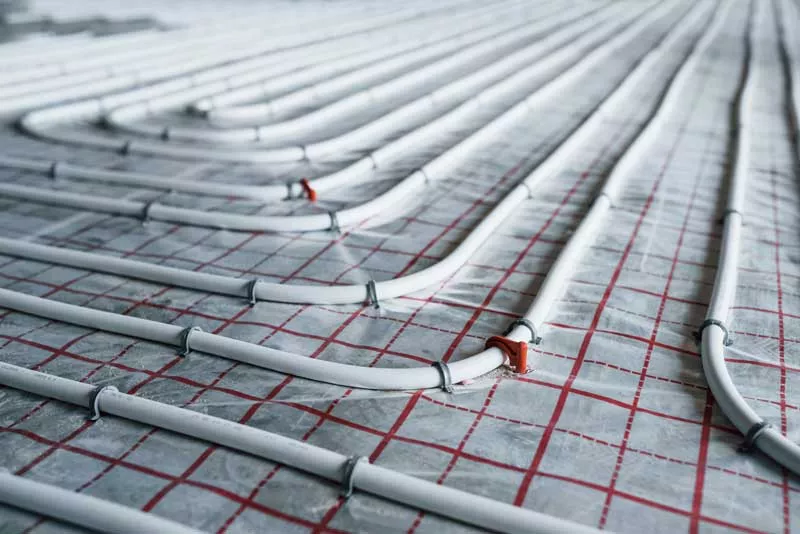
If you live in a cold region, chances are your heater won’t do much to heat up the entire place.
In that case, opting for an Underfloor Heating System (UFH) might be what you need. There’s a catch, though; not all types of floors are suitable for either a wet or dry underfloor heating system.
If you decide to install a dry or wet underfloor heating system, you might need to change your flooring to something more suitable. But if you’re still preparing the place from the start, then you’re in luck!
So, what type of flooring can be used with underfloor heating? That’s exactly what we’re going to discuss in this guide. Whether you’re a landlord, real estate investor, or homeowner, we’ll make the process of pinpointing the right type of flooring for your underfloor heating system a whole lot clearer!
Preparing your floor is an essential procedure that you shouldn’t skip when creating an underfloor heating setup. Improper preparation won’t only damage the flooring but also cause problems with the heating system after a while.
To prepare your floor for underground heating, follow these steps:
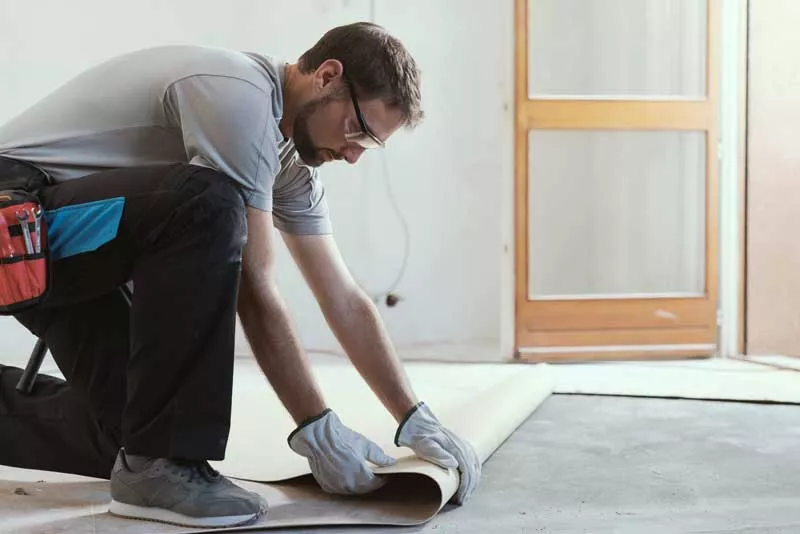
There are a handful of flooring types that work well with many underfloor heating options, and we’re going to explore each of them in detail in the following sections:
Carpet flooring is ideal if you have an electric or hot water underfloor heating system. Most of the time, homeowners like to use foil heaters with carpet flooring or similarly carpet tiles.
A foil heater consists of a thin multi-strand that’s fully enclosed with a fibre-reinforced foil, in addition to a fluoropolymer-insulated, dual-core heating cable.
The system integrates a flat aluminium foil that barely raises the floor, and that’s exactly why it’s perfect for floating floors. It’s also worth noting that the foil is fully buried into the ground. This allows for a continuous earth layer while also letting the foil function as a heat diffuser that draws the heat from the heating cable.
There are many perks of using this type of flooring with underfloor heating systems, which include:
However, there are a couple of things you need to keep in mind when setting up a foil heater with carpet flooring.
First, you need to make sure there’s sufficient insulation in the concrete base that the heating system will be installed on for it to work efficiently. You can use some insulation boards for that purpose.
What’s more, your carpet flooring should have minimal heat resistance for you to get the most out of your underfloor heating system. You should also factor in the thermal resistance of the underlay if you’re going to use it in the first place. Furthermore ensuring your carpet is fitted correctly is essential to keeping heat in. Be sure your measure for your carpet correctly.
Additionally, ensure that the flooring’s overall tog value is no more than 2 tog.
While wood flooring isn’t the best option for underfloor heating systems, it’s far from the worst. You should be able to use wood flooring with underfloor heaters while keeping some considerations in mind.
For instance, you’ll need to keep the heating system working for a longer time and at warmer temperatures to get the same results that you’d get with other types of flooring. This won’t only overwork your system and cause maintenance issues in the long run but also raise the monthly energy bills quite noticeably.
On a side note, there’s a threshold for the maximum temperature that you can put your system on with wood flooring installed. Too much heat will increase moisture levels in the wood, causing it to flex. Typically, you need to keep the temperature colder than 27 degrees Celsius.
If you do decide to opt for wood flooring, your best bet is to get engineered wood flooring. Engineered wood flooring has excellent conductivity while also being thick enough to add a touch of luxury to the place. Not to mention, it can withstand fluctuations in temperature much better than regular wood flooring.
Laminate flooring is a great alternative to wooden flooring. It mimics the looks of wooden flooring while overcoming some of the challenges that make it not very suitable for underfloor heating. It’s usually used with both wet and electric underfloor heating systems.
Laminate flooring integrates several layers that include a high-density fibreboard along with two additional layers for protection and luxury looks.
On top of that, laminate flooring offers tremendous wear and tear resistance while also providing better heat tolerance than wood flooring or even engineered wood flooring.
You can use underfloor heating with laminate flooring without worrying about flexing or other problems related to temperature changes. However, keep in mind that laminate flooring may be prone to buckling, so you must leave an expansion gap around the flooring to prevent this problem.
Just like engineered wood flooring, the maximum underfloor heating temperature for laminate flooring is 27 degrees Celsius. It’s also recommended that you start with a cold temperature and slowly increase the temperature by around 4-5 degrees every day.
Moreover, make sure that the laminate flooring thickness is no more than 17 mm to allow for maximum heat conductivity.
As for installation, there are two ways to fix laminate flooring, which include:

Ceramic tiles and stone are one of the best floorings for underfloor heating, thanks to their exceptional heat conductivity properties.
Once you turn on your underfloor system in a room with ceramic tile and stone flooring, you’ll notice that it has gotten much warmer within a few minutes. Plus, ceramic tiles and stone flaunt excellent wear resistance and keeping them in good condition is a breeze.
However, since heat builds up quickly in tile floorings, it also dissipates quickly, so once you turn off the underfloor heating system, the place will quickly revert to the environmental temperature.
Ceramic tiles can withstand a temperature of up to 29 degrees Celsius, which is at least a few degrees higher than many other flooring choices. Ceramic tile and stone floorings are capable of generating a heat output of up to 200W/m². Not to mention, they aren’t negatively affected by temperature fluctuations, so no need to worry about cracks or buckling.
Moreover, tile and stone floorings are pretty cheap, so you don’t need to spend a fortune to get the most out of your UHF. Let alone, they’re easy to clean and maintain.
Lastly, mortar is used to fix ceramic tiles. It’s spread with a tile trowel to cover an area that’s slightly larger than the size of the tile.
Vinyl, linoleum and luxury vinyl tiles (LVT) floorings are relatively less common than other types of floorings. They look great, no doubt about that, but how do they fare with underfloor heating systems? Before we get into that, let’s find out what these floorings are made of.
Vinyl is made of a blend of resin and a wide range of stabilisers and plasticisers. On the other hand, linoleum consists of natural materials that include natural mineral pigments, linseed limestone, wood flour, tree rosin, jute, and many more. A canvas backing is also used to add strength to the formula.
Since vinyl and linoleum floorings aren’t that popular, to begin with, many people don’t know whether it’s OK to use them with underfloor heating systems or not.
The short answer is that they’re definitely suitable for such systems. There are some limitations, though, like the fact that these floorings shouldn’t exceed a temperature of 26-27 degrees Celsius.
Vinyl floorings are pretty slim, meaning that they won’t obstruct heat flow from the underfloor heating system to the room. However, it’d be best if you made sure that the property is adequately insulated to minimise heat losses. After all, you can’t use the UHF at high temperatures, so you need to compensate for it somehow.
Before installing vinyl or linoleum flooring, make sure that it was unwrapped for 18-24 hours.
Polished screed is a synthetic resin flooring that offers a good level of durability while giving a modern look to the place. It’s also pretty easy to clean and has an adequate level of wear resistance.
Just like other synthetic resin floorings, polished screed floorings typically sport a thickness that can be anywhere from 0.15 mm all the way up to 6 mm. The exact thickness depends on the application. For example, polished screed flooring used in a commercial building will likely be thicker than that used in a home.
If you’re renovating a property and want to install polished screed flooring, it’s highly recommended that you opt for an underfloor heating system that has a glass fibre rendering mesh. This design feature will make it less likely for stress fractures to develop in the flooring.
On the other hand, if it’s a new build, the system will be integrated into the screed subfloor, so no need for any special adjustments here.
Polished screed floorings offer better thermal conductivity than floorings like hardwood and carpet, a key feature for a UHF.
Rubber flooring (often used as safety flooring) is an excellent choice for places that are exposed to heavy use. These include home gyms, workshops, playgrounds and pet shelters.
However, installing a UHF under rubber flooring may be a bad idea. It’s not entirely impossible; it’s just that you won’t really benefit much from the installed system.
So, why is that? Well, for starters, rubber floorings may release a “chemical smell” when heated, which can be intolerable for people with allergies. Another concern is that rubber floorings are prone to contracting and extracting with fluctuating temperatures, which may damage them.
It’s also worth mentioning that rubber is more of a heat insulator than a conductor, so a UHF that’s insulated with rubber flooring won’t be that useful.

As a general rule of thumb, you need to wait for around a week before turning on underfloor heating after laying the flooring. However, you may activate it for a few minutes after installation to ensure that everything is working as it should.
It’s also recommended that you start with a cold temperature and increase it by a few degrees every day. You can use a floor temperature sensor to keep track of the temperature.
Yes, you can put a rug on a floor with underfloor heating, albeit with some restrictions. When you place a rug on a heated floor, you’re essentially adding an extra layer for the heating system to get through, making it work harder. This could result in a slight decline in the amount of heat you feel in the room.
However, you can minimise these effects by choosing the right type of rugs to use with your underfloor heating system. Things like rug material, thickness, and length can all make a huge difference here.
Also, keep in mind that not all rugs are suitable for all floor types. In fact, placing a carpet on top of a floor with underfloor heating may cause the floor to wear out prematurely.
Now, here’s a quick overview of the rug features that you need to pay close attention to:
As you might’ve guessed, thick rugs will increase the insulation of the flooring, causing the underfloor heating to struggle. Your best bet would be to choose a rug with a tog of 2.5 or less to have the most efficient underfloor heating system.
Rug length can dramatically impact the performance of your underfloor heating system.
If you put a 20x40 cm rug on a 500x450 cm floor, it’ll barely affect the amount of heat that passes through the floor. On the other hand, covering a big portion of the floor with a rug means that less heat will pass through, especially if the rug is too thick.
When shopping for a rug to use with your underfloor heating system, make sure you pick one that’s made of natural materials instead of synthetic ones. Synthetic materials, like nylon and polyester, have poor heat tolerance, meaning that you’ll likely damage a rug made of one of these materials if you put it on a heated floor.
On the flip side, natural materials like wool do a much better job at holding and transferring heat, making them a favourable choice for rooms with underfloor heating.
It depends on what type of underfloor heating you have. For example, if you use Forced Air or Hydronic underfloor heating, opt for an underlay that has a tog rating of no more than 1.0.
One good type of underlay to use here is Duralay Heatflow. It has a meagre tog rating, making it ideal for underfloor heating systems. You could also install a Tredaire King underlay if you have carpets on the floor.
On the other hand, it’s not recommended to use an underlay with electric underfloor heating systems, simply because the heating element is installed on the subfloor. An underlay with this type of underfloor heating will render the system useless.
What type of flooring can be used with underfloor heating? There are a lot of varieties! The ones with the least thermal resistance are ceramic tile and stone floorings. These types of flooring will have good heat conductivity properties and will therefore give a good underfloor heating experience. However, we know that ceramic tile and stone flooring is not everyone’s cup of tea. In that case there are many other types of flooring that have been designed with underfloor heating in mind. This means generally, you can choose the flooring you like and that works best for your property as opposed to just basing your decision on flooring with the least thermal resistance. Before you do buy any flooring, always make sure you consult with a professional flooring company first so they can give you the right advice.
On the other side of the coin, try to avoid rubber floorings. This is probably the worst type of flooring to use with underfloor heating systems. Rubber is a heat insulator, so it doesn’t make much sense to use it.