


(0)1622 589 999

info@allfloorstradecenter.co.uk

Are you looking for the top flooring brands to help you remodel your house?
Whether you’re looking to improve your home’s aesthetic appeal or maintain your existing floors, you’ve come to the right place.
This comprehensive guide explores various flooring brands, offering insights to help you make informed decisions that match your preferences and lifestyle requirements.

When it comes to carpet brands, there are several top contenders worth considering.
Apart from well-known flooring companies like Victoria Carpets, Brintons, Axminster Carpets, and Karndean, there are numerous other carpet producers who excel at producing high-quality goods. Let’s look at some of the top carpet manufacturers known for their dependability, fashion, and all-around excellence.
Since the 1960s, Amtico has been a well-known British company that creates luxury vinyl flooring.
Through the acquisition by US company Mannington, it has developed a reputation for excellence and preserved its market position. Amtico continues to be associated with luxury and toughness even though some of its production is now made in the United States.
Amtico flooring is a premium product, and its price reflects its superiority. However, prices may vary based on the collection, with Signature being the more expensive option and Spacia being the more reasonably priced one.
Amtico flooring is known for its durability, thanks to its wear layer and Quantum Guard technology. Each collection has a different wear layer thickness, with Signature having the maximum level of tensile strength.
Spacia offers a 25-year residential guarantee, whereas Signature offers a lifetime warranty. For particular collections, there are even commercial warranties available.
Quick-Step is a popular brand of laminate flooring that imitates the appearance of hardwood.
It offers a selection of solutions for every price range, from low-cost items to more expensive ones. You’ll also find a respectable assortment of styles, including embossed, smooth, and hand-scraped finishes, as well as a range of colours.
This enables homeowners to select choices that meet their preferences for design.
The utilisation of patented waterproofing technology by Quick-Step in some of its product lines is one of the company’s standout characteristics. This technology offers an additional layer of moisture defence, making it appropriate for use in places like kitchens, baths, and laundry rooms.
Additionally, Quick-Step laminate frequently carries the low-VOC certification, indicating that it complies with tight requirements for indoor air quality. For people who are worried about their own health and the well-being of their family members, this is a crucial consideration.
In the world of wood flooring, Ted Todd is a reputable and well-known name, notably in the UK.
With a long history that dates back almost two decades, Ted Todd has made a name for itself as a leading producer and supplier of premium hardwood flooring. Its goods, which range from solid to engineered wood, are excellent examples of workmanship, creativity, and a dedication to sustainability.
Ted Todd’s floors aren’t just solutions for flooring; they’re also lasting investments that improve the personality and ambience of any room.
In contrast to carpets, laminates, and vinyl manufactured of plastic, Ted Todd distinguishes out in the flooring sector for its 100% natural hardwood floors. These floors get better with age, acquiring a lovely patina.
Additionally, truthful and excellent product specifications provided by Ted Todd demonstrate its dedication to transparency. It guarantees responsible sourcing with externally certified certifications like FSC® and PEFC.
A well-known name in luxury vinyl flooring, Moduleo is a member of the IVC Group. Since its founding in 1997, Moduleo has combined the beauty of natural ingredients with the toughness of vinyl. Its flooring is stain- and scratch-resistant, and it’s also simple to maintain. It provides fashionable solutions for any room with a variety of real wood and stone styles.
Moduleo stands out from other businesses in the sector due to its focus on sustainability, which attracts customers who are looking for environmentally friendly flooring alternatives.
The brand uses 50% recycled materials and renewable energy sources in its manufacturing operations to incorporate environmentally friendly practices. The low-VOC emissions of Moduleo’s flooring materials support the creation of healthier interior environments.
With more than 160 years of experience, Kahrs is a renowned brand of hardwood flooring. With its Swedish roots and extensive selection of 11 wood species and 22 collections, it’s known as an engineered hardwood flooring innovator.
Kahrs made engineered hardwood flooring popular by introducing it to the globe in 1941. The company uses the best oak possible for its products, which are derived from sustainable forests.
Each plank goes through an intricate production process that includes several layers of wood for increased strength and a lovely surface layer for an authentic appearance.
The company has received recognition for its commitment to quality and creativity, making it a popular choice for builders, interior designers, and homeowners alike.
There are various flooring options available, and each brand specialises in a certain kind of flooring material and style.
The top brands for each type of flooring are highlighted here, along with the benefits and drawbacks of each.
Laminate flooring is a popular and reasonably priced flooring option that resembles stone or hardwood. It’s made up of several interconnected layers that are normally made of a sturdy wear layer, a decorative layer, and a backing layer.
Here’s a list of the top brands offering laminate flooring:
One of the best laminate flooring brands in the UK, Mohawk provides a huge selection of beautiful, reasonably priced laminate flooring solutions with outstanding durability.
RevWood, RevWood Select, and RevWood Plus are the three lines into which Mohawk laminate flooring products are categorised.
Pros:
Cons:
Renowned for producing high-end laminate flooring that’s creative, fashionable, durable, and simple to install, Quick-Step can be the perfect choice.
Pros:
Cons:
Vinyl is a resilient flooring material that’s largely constructed of polyvinyl chloride (PVC). Due to its dependability, ease of maintenance, and variety of design options, it’s a well-liked alternative for both residential and commercial areas.
Here are the best brands from which you can buy vinyl flooring:
Armstrong is popular for its wide range of realistic-looking, incredibly durable vinyl flooring.
Pros:
Cons:
For both residential and commercial uses, Moduleo is one of the well-known luxury vinyl flooring brands with a huge selection of designs.
Pros:
Cons:
Polyflor, a UK brand, offers durable, easy-to-maintain vinyl flooring solutions for residential and commercial applications.
Pros:
Cons:
A carpet is known as a soft floor covering created from a variety of fibres, including nylon, polyester, wool, or a combination of these. Due to its comfort, insulating capabilities, and visual appeal, it’s a popular option for residential and commercial areas.
Here are the brands offering carpet flooring:
A luxurious brand with high-quality carpets for various interior styles, Brintons is a top pick for customers looking for carpets.
Pros:
Cons:
Axminster Carpets offer timeless elegance and exceptional craftsmanship in classic spaces.
Pros:
Cons:
Victoria Carpets is a reputable carpet manufacturer in the UK that provides a wide selection of carpets, including carpets made of wool, synthetic fibres, and blended fibres.
Pros:
Cons:
A luxury vinyl tile (LVT) is a vinyl flooring that resembles natural materials like wood, stone, or tile. It’s made up of several layers, including a wear layer that’s protective and constructed of urethane or PVC. The wear layer offers a realistic appearance while protecting against scrapes and stains.
Check out the list of brands offering LVT.
Among the best LVT flooring brands, Amtico is an exclusive brand that excels in high-quality LVT flooring with innovative designs.
Pros:
Cons:
Karndean is a top luxury vinyl tile brand known for its exceptional quality and diverse design options.
Pros:
Cons:
Linoleum flooring, sometimes referred to as lino, is a robust and sustainable floor covering manufactured from organic components, such as linseed oil, cork dust, and wood flour. It’s perfect for kitchens, bathrooms, and high-traffic areas because its surface is water and microbial-resistant.
Here’s a list of the top brands offering lino flooring:
Linoleum flooring from Tarkett is famous for its cutting-edge designs, friendly manufacturing techniques, and natural beauty, offering a sustainable and long-lasting flooring option.
Pros:
Cons:
From contemporary designs to timeless styles, Gerflor has mastered the art of lino flooring by combining elegance, durability, and eco-friendliness to create resilient flooring solutions.
Pros:
Cons:
The term “wood flooring” describes any sort of flooring constructed from real wood. Due to its enduring beauty, toughness, and warmth, it’s a well-liked option for both residential and commercial buildings.
Here are the best brands that offer wood flooring:
Known for attention to detail, Ted Todd provides high-quality and sustainable handcrafted wood flooring.
Pros:
Cons:
Havwoods is one of the best engineered wood flooring brands in the UK, providing an extensive collection of premium products.
Pros:
Cons:
Stone flooring is a tough and luxurious kind of tile that’s carved straight from blocks of natural stone like marble, granite, limestone, sandstone, slate, or travertine. It enables natural temperature management while reducing allergies and functions well both indoors and outdoors.
Here are some of the best-selling brands that deal in stone flooring:
Ca’ Pietra is an expert in natural stone flooring and provides a large variety of stone tiles, including travertine, marble, limestone, and slate. It’s renowned for its exceptional craftsmanship and beautiful patterns.
Pros:
Cons:
Mandarin Stone is well-known for its wide selection of natural stone flooring, which includes marble, limestone, slate, and quartzite. To accommodate different aesthetics, it provides a range of finishes and designs.
Pros:
Cons:
Concrete flooring is a robust and long-lasting surface created from poured or precast concrete. It’s frequently used in utility spaces, garages, basements, and some home interiors. It can be polished, engraved, or stained to produce aesthetically pleasing surfaces.
Listed below is one of the top-selling brands offering concrete flooring:
RCR Flooring offers industrial and commercial flooring solutions, including concrete systems, epoxy coatings, self-levelling compounds, and anti-slip finishes.
Pros:
Cons:
Resin flooring combines a mix of liquid resin and hardening chemicals to produce a seamless, long-lasting surface. It’s a well-liked option for business, industry, and household uses.
Here are the top brands offering resin:
Altro resin flooring is a dependable and well-known option for remodelling places into more attractive ones.
Pros:
Cons:
Flowcrete produces high-quality, customisable flooring systems for commercial, industrial, and residential applications.
Pros:
Cons:
Made from recycled materials like tyres or natural rubber, rubber flooring is a versatile and long-lasting flooring option. It offers diversity in design and is simple to maintain, making it a typical choice for usage in high-traffic locations like gyms and hospitals.
Here are the top brands that deal in rubber:
With its wide range of rubber flooring alternatives, including rolls, tiles, and mats, Polymax is a trusted brand. It offers resilient and non-slip rubber flooring options for both industrial and domestic situations.
Pros:
Cons:
Flex Flooring specialises in advanced rubber flooring technologies, such as rubber tiles and poured rubber. Its products are renowned for their dependability and adaptability to different indoor and outdoor environments.
Pros:
Cons:
Flooring brands to avoid are those from lesser-known or generic brands that don’t have a good reputation in the market. There’s a higher chance that these brands haven’t completed rigorous testing or quality control procedures.
Furthermore, you may have limited options in the event of problems or faults with such brands due to the lack of a robust customer support system and trustworthy warranties.
It makes sense to give preference to brands that have a reputation for being dependable, trustworthy, and supported by enthusiastic consumer feedback.
Below is an overview of brands costing from the lowest to the highest.
Here are the most budget-friendly brands out there:
Known for providing carpeting solutions that are both inexpensive and long-lasting in a variety of styles and designs, Lifestyle Floors is at the top of this list.
Lifestyle Floors offers various budget-friendly options, starting at £10 per square metre and going as high as £39.99.
With no sacrifice to quality, Cormar Carpets provides a selection of reasonably priced carpets that are renowned for their stain resistance.
Starting from £10, the prices can go as high as £30.
The following brands may put a dent in your wallet:
Amtico luxury vinyl flooring offers mid-priced Spacia and premium Signature collections with customisation options and exceptional quality, starting at £30-£43 per square metre.
The prices can go up to £70-£80.
Ted Todd is known for its expertise in luxury hardwood flooring and is frequently regarded as the best option for elegant interiors.
Starting at £64.99 per square metre, Ted Todd Warehouse’s selection fits well under the banner of expensive brands.
Finally, let’s see some of the high-end brands:
Crucial Trading is a luxury brand specialising in natural and sustainable materials like wool, sisal, seagrass, and coir. It offers innovative designs and prioritises environmental sustainability, attracting customers with a stylish and eco-friendly appeal.
Established in 1783, Brintons is a distinguished business renowned for its knowledge, skill, and expensive carpets. It adds refined richness to any place with its time-honoured elegance, elaborate patterns, vibrant colours, and subtle aesthetics.
Brintons produces distinctive collections that offer cutting-edge designs and novel viewpoints in association with famous designers.
Victoria Carpets, a luxury brand with a long history dating back to 1895, is known for craftsmanship, excellence, and association with royalty. Its diverse styles and price points solidify its position as a prestigious choice in the carpet industry.
If you’re looking for a sustainable flooring option, here are some brands that offer them:
Premium vinyl flooring from Moduleo prioritises environmental sustainability in addition to meeting high criteria for quality. Its vinyl flooring isn’t only recyclable, but it also contains up to 50% recycled materials, reducing its environmental impact.
With its linoleum flooring in particular, Forbo is famous for its dedication to sustainability. Its commitment to environmentally responsible practices is further emphasised by the fact that its linoleum floors are made from natural and renewable materials.
Brands that offer durable flooring are listed below.
Premium vinyl flooring from Karndean is well-known for its great performance and durability, even in high-traffic areas. It has created its vinyl flooring to endure high foot activity without sacrificing quality or look.
Innovative technology is used by Quick-Step to produce laminate and vinyl flooring that’s not only durable but also scratch-resistant. Its flooring solutions are built to last and can sustain daily use because of their long-lasting functionality.
Want to clean your floors? Here are some brands that offer good floor cleaners:
Warranty is an important factor in any purchase. Here are the brands offering lifetime warranties:
To sum up, there are several reputable brands that specialise in various materials and styles throughout the flooring industry. These businesses provide a variety of solutions to suit every preference, from the timeless elegance of hardwood to the cost-effectiveness of laminate, the luxury of carpets, and the toughness of LVT and resin flooring. Whether commercial or residential, at All Floors Trade Centre, we help provide the perfect solution to individuals and businesses to enhance their flooring. Get in touch with us for all your flooring needs.
Are you on the lookout for the best carpet tiles out there? Then, you're in the right place!
New flooring trends emerge every day, but carpet tiles remain at the top of the market with their unprecedented durability and affordability. Carpet tiles are available in many patterns, textures, and colours to satisfy every taste. And while this works for the best for many people, it makes it more challenging to find your perfect match. That's where we come in!
We'll help you choose the best carpet tiles for your place by telling you everything you need to know about them. So without further ado, let's jump in!
In this section, we'll discuss carpet tiles' materials, benefits, types, and more to help you reach a decision.
Carpet tiles are somewhat like porcelain and ceramic tiles, except they're manufactured from broadloom carpets that are often installed wall-to-wall. They're famously known as square carpets or modular carpets, and they mostly come in square shapes. However, some people like to get creative and make carpet tiles in many geometric shapes.
Carpet tiles widely vary in terms of size; you have the freedom to choose from 48x48, 50x50, 60x60, and 96x96cm squares. You'll most probably see them installed in commercial places, like restaurants and bars, for example.
As we've mentioned before, carpet tiles come in many materials. Some are even made of many fibres blended together. So to choose the best one for your place, you should have enough information about all of them.
Carpet tiles are mainly wool, nylon, polypropylene, polyester, and recycled materials. Now, let's dive into more details regarding each one of them.
Wool is a luxurious, natural fabric that'll stay with you for ages. It's strong, partially resistant to stains, and has overall excellent resilience. As for the texture, wool makes for very soft carpet tiles. They also have dense fibres to ensure top-notch structural integrity while giving you comfort at every touch.
Wool is mostly cream-coloured, which means it'll limit your furniture colour choices if you go with it. But, generally, it goes best with warm-toned woods.
Finally, although wool is pricier than other options, it's worth every penny.
Unlike wool, polypropylene is a synthetic fibre. However, it was manufactured to resemble the luxurious fabric significantly.
While polypropylene is nearly as stain-resistant as wool, it certainly doesn't offer the same durability. But, as a rule of thumb, natural fabrics are always more durable than synthetic ones.
As a bonus point, polypropylene is less expensive than wool and resists colour fading nicely.
Although not as strong as polypropylene, nylon packs quite the advantages when it comes to carpet tiles. For starters, it offers superb resilience and durability. Also, it resists stains nicely and is static-free.
Nylon carpets often have elegant and glossy appearances, and they come in many colours. Finally, nylon is more affordable than wool.
Polyester is one of the most budget-friendly synthetic materials on the market. So if you have a limited budget and want to install carpet tiles, you should opt for it.
Although it has lower quality than other choices on our list, polyester is durable and will last with you for a long time. More so, it's more stain-resistant than most fabrics.
Recycled materials are becoming more famous every day because of their environmental friendliness. They're often made out of industrial nylon wastes, fishing nets, and more. Another reason they're a favourite choice among people is because of their cost-effectiveness, as recycled materials are less expensive than wool and nylon.
However, the low price doesn't mean bad quality. On the contrary, recycled materials come in many colours and shapes and offer durability and elegant appearances.

Many people wonder why carpet tiles are so famous when they can simply put carpets on their hard-surface floors. However, they have many advantages you might not know about. So here are some of the most important.
Easy installation might be the best benefit carpet tiles offer. Not only that, but they're also easy to handle and transport since they come in small swatches. Simply put, carpet tiles offer convenience like no other floor trend does. They're also easy to measure for; you don't have to call a professional for it.
As for fitting, any professional tiles installer can put carpet tiles together on the floor. The process won't take much time and will only cause minimum disruption in your house.
Carpet tiles will have your back if you like to get creative and renovate more often than usual. Unlike wall-to-wall carpet installations, they're tremendously easy to replace. And for the best part, you can replace only a few tiles and keep the rest. You don't have to replace your entire flooring.
Moreover, you can reuse the replaced carpet tiles somewhere else. If you think they'll work better in another room, you can easily install them there.
Carpet tiles offer top-notch versatility, so no matter what you have on your mind regarding interior design, you'll find your perfect match. They also suit every room; you can install carpet tiles in your bedroom, dining room, living room, kitchen, and more. And since they come in small swatches, you can use many different patterns and colours in the same room.
For people who care about sustainability, let us assure you that installing carpet tiles guarantees you less waste than other flooring trends. This is because carpet tiles don't need as much adjustment or cutting. They can fit any space easily, even rooms with odd angles.
There are a few points you should consider when choosing the best carpet tiles. Here's a brief roundup about all of them.
The first point you should consider is the room where you'll put your carpet tiles. For example, you can't use the same carpet tiles in your bedroom and basement.
Your bedroom is considered a high-traffic room since you use it multiple times during the day. Accordingly, the best carpet squares for bedrooms are often the durable types, not luxurious ones.
Since bathrooms and kitchens' floors are susceptible to becoming damp all the time, you shouldn't install carpet tiles there. But if you insist, you should ideally look for moisture-resistant carpet tiles. If you ignore this point, you might have to replace your tiles sooner than you expected.
Same as your bedroom, your living room's floor is on call for most of the day. This is especially the case if you have children running around your house. In this case, you should look for stain-resistant and durable carpet tiles.
Many people favour carpet tiles for basements because they can easily remove them in case of water damage, and they aren't wrong. The best carpet tiles materials for basements are synthetic ones, like nylon and polyester. This is because they resist water better than natural fabrics, like wool.
Since carpet tiles are so versatile in terms of appearance, many people install them in their hallways. Also, since rooms are much more susceptible to staining accidents than hallways, you can install pricey carpet tiles in your hallway without worrying.
When people renovate their offices, they often look for budget-friendly materials, not luxurious ones. This is what makes home office carpet tiles an ideal choice. Also, most people have cablings on their office floors. As a result, they prefer carpet tiles because they can use them for partial coverage.
Carpet tiles attract many people with their advantages, so they're widely used indoors and outdoors.
Generally, carpet tiles shine in dry indoor rooms. Therefore, you can install them in any room of your choice. However, those conditions differ if you have underfloor heating in your house.
Also, if you have allergic family members, you should look for hypoallergenic carpet tiles to avoid adverse health reactions to fabrics.
Astonishingly, some carpet tiles protect against mildew in rooms susceptible to moisture. So you can install them in home gyms, basements, kitchens, and more. That said, we still don't recommend installing carpet tiles in high-moisture areas.
If you have a swimming pool or a patio in your house, and you're wondering about the possibility of installing carpet tiles, let us assure you! There are weather-resistant carpet tiles that you can install outdoors.
Ideally, it'd be best if you got high-density carpet tiles for high-traffic areas in your house. This way, they'll stay with you for the longest time possible, and you won't have to replace them often.
If you have a room in your house where your kids and pets spend most of the day, you should install stain-resistant carpet tiles. Also, you should ideally look for budget-friendly options.
Carpet tiles can be installed and fitted in different ways, and you can try them all by yourself. Here's a brief roundup about carpet tiles' installation types.
The peel and stick installation method is as easy as it sounds. All you'll have to do is lay your carpet tiles on the floor. Then, take each tile and peel off its paper backing. This way, the sticky side will be exposed so that you can install it on your floor.
If you want to replace your self-adhesive carpet tiles after a while, you'll be able to do so smoothly because of the adhesive on peel and stick tiles. It'll stay sticky for a long time so that you can remove it from the floor without leaving residues behind.
Installing carpet tiles using adhesives is slightly different from the peel and stick method. You'll have to spread glue on your floor first. Then, after waiting for a few minutes for the adhesive to get sticky, you'll position each tile in its place.
Installing interlocking carpet tiles is like solving a puzzle. Each carpet square has a puzzle-shaped edge that perfectly matches another piece's edge. Also, the tiles don't attach to your subfloor. This makes interlocking carpet tiles ideal for people who renovate a lot and renters.
Here are brief explanations of three carpet tile construction types.
Tufted carpets are highly flexible in design, budget-friendly, and offer short production time. They can also be seamed across the ends or along the sides, which gives them an advantage over woven carpenters. All in all, installing tufted carpets takes less time and has less carpet waste than other construction types.
Woven carpets are exceptionally durable, luxurious, and high-quality. They're mostly made of 100% natural fabrics, like wool, for example. Also, they have elegant designs that show superiority in any room they get put in. However, those advantages come at a price since woven carpets are expensive.
When it comes to durability, needle-punched carpets rule. They're resistant to colour-fading and sunlight, and they dry faster than most carpets. However, they lose an advantage when it comes to design since they aren't as versatile as other types. Overall, needle-punched carpets are better suited for outdoor areas, not indoor rooms.
Here are the most famous carpet tile styles you'll find on the market.
Cut pile carpets are ideal for family rooms and bedrooms for the luxurious feel they offer. They all consist of carpet yarn fibres cut at the top to give a flat appearance.
As the name refers, loop-pile carpets aren't cut like cut pile ones. Instead, they're looped to give a dense look. Those usually work better in high-moisture rooms, like kitchens, basements, and laundry rooms.
Cut and loop pile carpets feature the best of both worlds. They have both lower loops and cut tufts at the top. This breeds beautiful patterns and makes those carpets a favourite for many people. The best part is that they're durable, so you can install them in high-traffic rooms.

Like all flooring types, carpet tiles need regular cleaning and maintenance to ensure they live for a long time. To clean your carpet tiles, you should ideally vacuum them twice a week or more if you have kids. This is because carpet tiles attract and keep dirt more than hard-surface floors. So if you don't clean them, they'll be looking all dusty and rugged in no time.
Another essential maintenance step is knowing your tiles backing before applying a spot treatment. For example, some carpet tiles have bitumen backing, a sturdy substance that doesn't work well with all spot treatments. This means that you'll have to buy specific cleaners to treat such carpets.
Moreover, you should always test your treatment method on a small area of your carpet tiles to ensure its safety. It'd also be best to apply the cleaner to a cloth first, then dap it on your carpet tiles. Avoid applying such treatments directly to your floor squares.
As a rule of thumb, you shouldn't rub stains out of the carpet tiles. Instead, blot them gently with a damp cloth and work on them starting from the edges, not the centre.
Finally, you should dry the wet spots shortly after treating them because moisture isn't ideal for carpet tiles. Some manufacturers recommend that users dry their damp tiles using a hairdryer.
Since carpet tiles are easy to care for and maintain, they can last for a long time with you, ranging from ten to 20 years or more. Of course, this period might be affected by your use. For example, the carpet tiles in your high-traffic rooms may need replacement faster than the ones in your hallways.
Wall-to-wall carpets are sold as long and wide rolls of fabric. They often take up the whole room and have seamless finishes. Generally, they cost more and take more time to install than carpet tiles. However, they're more versatile in terms of design and customisation, and they have thicker backings.
When it comes to installation, carpet tiles rule. This is because wall-to-wall carpets are only printed on giant rolls, so they need more cutting and shaping beforehand. As a result, they leave more waste behind.
All in all, carpet tiles are relatively more durable and practical, but wall-to-wall carpets are more luxurious and elegant.
Generally, the cost of carpet tiles per square metre ranges anywhere from £25 to £50. This also includes measures and fitting, adhesives, and other necessary materials for installation.
Carpet squares might cost more than regular carpets per square metre. But when you consider installation, storage, and transportation costs, you'll find that carpet tiles are less expensive than traditional carpets.
If you've been considering other flooring options for your house, here are the cost differences between them and carpet tiles.
Laminate flooring and carpet tiles are very close in terms of price, with carpet tiles being less pricey—however, laminate flooring rules in terms of durability and weather resistance.
Carpet tiles are less expensive than real wood floorings. This is especially true when considering the costs of installation and transportation.
8Although carpet tiles are less expensive as a purchasable product, they cost more than LVT floorings after calculating installation and transportation costs.
Since carpet tiles are small squares that you can replace throughout the years, they're much more sustainable than other flooring materials. For instance, suppose the tiles in front of your bedroom door get worn. Then, you can smartly replace them with a few ones from under your wardrobe or bed. You don't have to buy new floor squares or replace your flooring altogether.
Moreover, as we've mentioned before, many carpet tiles get manufactured from recycled materials.
Unlike wall-to-wall carpets, seams are often visible in carpet tiles. However, you can hide the seams if you don't appreciate how they look. To do so, heat a strip of seam tape with your steaming iron and put it beneath any two tiles. Then, run your hot iron over the seam tape and the tiles gently.
After that, you should place any heavyweight on your newly repaired seams and leave them for a few hours.
Are you looking for a cost-effective, durable, and elegant flooring trend? Look no further than carpet tiles. In addition to those advantages, they're insanely easy to install and transport. As a result, you'll waste no time during the renovation.
As a bonus point, carpet tiles come in many materials, colours, and shapes. So no matter what your needs are, you'll find your perfect match.
Looking to purchase carpet tiles, need them installed or want to know more? Get in touch today or come and visit our store!
Chances are you’re looking for floor renovation ideas. And you probably want to learn about the top flooring trends of 2022. As a homeowner, property developer, or designer, you want to ensure that every room in the house is up-to-date and eye-catching. After all, you don’t want to splurge on your flooring only for it to become old fashioned in some years.

We’ll tackle the home flooring ideas that involve types of flooring, features, colours, patterns, textures, layouts, looks, and look-alikes. This way, you’ll know everything you need to know before diving into your project.
Hardwood flooring is a very consistent option. It’s a classic, especially for the main areas of the property. The trend for hardwood flooring is to get wide and long planks. So, we’re talking 18” to 20” wide and 12’ long or more. As for the finishes, we expect a lot of natural penetrating/hard-wax oil with no sheen.
Vinyl floors are trending right now, and there are some vinyl trends you shouldn’t miss. For one, we have WPC (wood plastic composite) vinyl. It’s like luxury vinyl floors with waterproof properties and resembles wood. Then, SPC vinyl floors are marked by their rigid core, which reduces ripples and waves. Accordingly, they’re perfect for uneven subfloors.
We can’t forget luxury vinyl planks (LVP), durable and stunning but not waterproof. As for luxury vinyl tiles (LVT), they closely mimic the stone look. Last but not least, vinyl sheets have fibreglass cores and backing to enhance durability. In addition, these sheets come in realistic textures and decorative designs.
Tip: Compile a mental list of all the features you need in your flooring types, such as safety features, water resistance, and more.
When it comes to tiles, we’ve got terrazzo. It’s made by collecting marble flecks, which gives it a versatile and vintage look. Then, green tiles can be anything from cool to bold (depending on the shade).
We also expect a lot of bold patterns. These can give your place character and add spice! Moroccan-style tiles are also in fashion, inviting warmth into your house with intricate designs. Finally, deep blue tiles are luxurious and chick.
2022 is coming strong with colours. We expect to see bold, colourful, and patterned carpets in small rooms. An incredibly trendy pattern is that of carpet tiles. They have a very abstract look and are practical. Another pattern we expect to see more of is smart stripes; they give off the illusion of space.
When it comes to popular colours, there are soft duck egg blues, as usual, and black and teal tones with flashy accents. But we also love the hot tones, such as lush berry and spicy chilli. They’re ideal for high-foot traffic areas. And we have the plain naturals for the minimalists. They’ll easily go with anything and promote relaxation.

The features you want in your flooring should be relevant to the most popular flooring in new homes. So, you want waterproof flooring, as it’s more durable when it comes to scratching, staining, and humidity.
That can be WPS vinyl, SPC vinyl, and more. There are also waterproof types of trendy laminate flooring, engineered hardwood, and even carpet with fibre coating!
Moreover, eco-friendly flooring is on the rise. Tiles and environmental friendliness go hand in hand. These natural products give you the natural look and texture you want. You can opt for terrazzo or statement marble.
As for carpeting, eco-friendliness translates to recycled carpet flooring. Yes, manufacturers mostly make carpets from recycled materials, including fishing nets and plastic soda bottles. They’re even taking it a step further to make the carpet more recyclable.
Moreover, a feature that we can’t miss is American-made flooring. We don’t know if this trend will ripple into the UK, but the rise of American-made flooring is due to Americans’ preference to support their economy.
Other than that, this feature also overlaps with the previous one in that many American-made flooring products are sustainable and eco-friendly.
Starting off, we have wood, which rarely goes out of fashion, and the same goes for wood looks. Firstly, you have laminate planks, the most economical wood-like flooring option.
Secondly, ceramic and porcelain tiles with wood looks are sturdy and waterproof. Thirdly, wood-look vinyl planks also bear a startling resemblance to real wood.
Also, due to its accessibility, stone-look flooring is gaining more popularity, especially the following looks. We have concrete-look flooring for more minimalist styles, which has an industrial look to it.
Moreover, limestone flooring has the natural look with multiple colour variations. As for travertine-look flooring, it’s been getting its well-earned attention lately with modern flooring styles and designer patterns.
And if you’re looking for “high-end luxury” that doesn’t cost an arm and a leg, check out marble-look flooring. You’ll find it in intricate patterns, and you can take pleasure in knowing that no one else has your exact flooring!
Furthermore, you could opt for slate-looking flooring. It assumes the look of ceramic and vinyl tiles, giving you a natural marble look.
Last but not least, you might appreciate decorative floors if you aren’t about the natural-flooring look. Examples include geometric patterns, trellis designs, and parquet patterns. These are trendy choices for bathrooms.
When it comes to in-style flooring colours, the phrase “grey is the new beige” comes to mind. Classic grey is only getting more popular, and designers are mixing it with beige to make stylish greige shades.
Grey is super popular, and it’s one of the most modern wood floor (check out our article on how to fix wood floor) colours. But you’ll find that grey stone flooring is popular as well. After all, it can so easily match your home’s aesthetic and give it a contemporary feel.
We expect to see more white and white undertones in 2022. These marble-look floors should brighten any room and make it look larger.
But even more important is white-washed flooring, especially common in coastal homes and farmhouses. Like real white flooring, white-washed flooring adds light to a room and balances the contrast of its colours.
White-washing doesn’t strip the wood of its grainy charm, but it encloses it in a white ash exterior. That means you can bleach your existing hardwood floors, which is expensive. Otherwise, you can replace them with ready-made white-washed floors.
Additionally, it’s trendy to have cool-toned flooring. We’re mostly talking about blue and green carpets, vinyl floors, and decorative floors but also light cool tones for stone and wood looks. If you’re worried about warm colours replacing cool ones soon, consider a muted tone that won’t go out of style for a while, such as grey-blue.
Moving on, you’ll find many woods, wood-look, and tile floors in high-colour variations. Their seemingly random colour designs give off a natural and rustic feel. For that reason, they’re excellent for minimalistic and contemporary flooring options. In wood, the colour variation is evident between planks, but in tiles, it’s evident if you look at the individual tile.
Then, black and white floors are coming back, stronger than ever with a new and improved look. But these aren’t the tiles you remember from historic homes. Instead, they feature more graphic designs, sometimes on smaller tiles. And you can pair them with vibrant tones in a small space to add a pop of colours.
The appeal of black and white is that it can contribute to a modern or a vintage look. So, you might want to consider it for a bathroom or a corridor. Perhaps even go with a checkerboard laying. Nonetheless, know that this isn’t a trend that’ll stay for long.
We’ve briefly alluded to the first of several flooring layouts, and that’s longer and wider planks. These planks give the illusion of space.
Chevron floors are also in, flaunting their arrow-like home flooring design. They’re laid one against the other with a 45-degree angle to create a point. Chevron flooring is one way to make a statement in a bedroom!
But we can’t talk about chevron floors without bringing up herringbone ones. These have a zig-zag pattern by laying two planks at a 90-degree angle. A rising trend involves mixing herringbone with plain stripes. Also, you can find built-in chevron or herringbone patterns to ease application. Either choice will spice up your kitchen.
In addition, a layout we’ve mentioned earlier is the checkerboard style. This classic layout for kitchens and bathrooms is everywhere. And the checkered trend isn’t specific to black and white, so you can buy these tiles in various colours and designer prints.
Additionally, the creative tile transitions have stepped in to replace traditional straight-line transitions. These transitions blend contrasting floor types, such as tiles and planks, enabling you to transition from a room to another in a creative way.
Let’s take a minute to talk about the trending flooring texture 2022. For one, wire-brushed and weathered looks are still not out. These are the floors with intentional wire scratches. After all, they don’t look dirty easily, requiring little maintenance.
Another trending texture is distressed flooring. Its intentional scrapes, bums, and knotholes give it character. The historic-looking texture looks excellent with brick walls, stacked stone, and interior design trends.
Smooth flavours are still classic, chic, and some of the best flooring options. They’re the default, so we know they’ll probably never be a thing of the past.
Tip: If you’re looking to renovate the yard, you should check out this guide about artificial grass installation.
We’re talking about floor textures, but what about carpet textures? Firstly, frieze or twist carpets feature carpet fibres with several twists. The shag trending style is very cute, and it’s everywhere.
Secondly, cut and loop carpets are getting much attention right now. These hybrid carpets mix cut carpet fibres with looped carpet fibres, producing different textures.
Many materials appear to be natural wood but aren’t, and they’re at the forefront. For instance, porcelain tiles are waterproof and way more durable than hardwood.
Then, there’s engineered vinyl planks/ luxury vinyl, typically waterproof and bears a remarkable resemblance to wood. Luxury vinyl is also a hardwood look-alike, but it may not be waterproof.
If you’re worried that hardwood may not be very sustainable, bamboo, cork, and terrazzo are eco-friendly alternatives that have its look.
As for dark wood laminates, the latest laminate flooring trends include a departure from them to lighter ones. Furthermore, parquet patterns are some decorative styles that resemble wood, and their cold tones are popular wood floor colours. We’re talking grey wood look-alikes, which make for modern styles.
As for the hardwood look-alike planks, they’re getting longer and wider as you already know. And of course, we can’t forget the distressed wood texture with its scrapes, bums, and knotholes, its fake wood texture resembling real weathered wood.

Not just any type of vinyl flooring is becoming popular but wide plank vinyl flooring. It’s taking over the market and replacing solid wood and engineered wood.
That’s because luxury vinyl tiles, a type of vinyl flooring, feature a high-performing system that people love. Also, people’s choice of replacement flooring in residential markets is vinyl flooring, responsible for 47.8% of the vinyl flooring market. And, of course, it’s inexpensive, durable, and easy to maintain.
We’re already given you tons of predictions, but we’ll recap the main ones to help you find the most popular and the best flooring in new homes. We have smoked wood floors, which are marked by their rich colour. There’s also white-washed wood with a soft look.
And weathered wood with a distressed texture is harbouring popularity recently. But then, there are patterned floors, black and white tiles, graphic ones, and more.
We’ve talked about greys and light tones being trendy, but you might want a colour that has more staying power. We’re referring to mid-tones. A colour that’s neither too light nor too dark is unlikely to look old fashioned in years.
When it comes to bedroom flooring trends, you’ll find modern designs trending. You can achieve that with earth tones, wide plank wood-looks, and tile floors with clean lines.
Otherwise, farmhouse bedrooms come with grey, white and neutral colours, earth tones for carpets, rustic area rugs, and wood-look floors.
As for vintage bedrooms, they’re trendy as usual. Use plush carpet rolls and minimalist area rugs to get a vintage bedroom.
Let’s focus a little on some kitchen flooring trends. People are using large format flagstones, which are hardwearing and timeless. As for stone colours, we’re seeing a shift from grey to beige tones.
There are also oak wood-look kitchen tiles, adding warmth to the kitchen. Other trends that we’ve talked about include herringbones, chevron, and white-washed wood-looks.
Overall, we hope you’ve learned some modern flooring ideas in 2022 so that you can renovate your floors in style. This way, it’ll look up-to-date for years to come. There are numerous trends for flooring types, styles, textures, patterns, looks, colours, and more.
All you have to do is decide on an aesthetic, classic, modern, vintage, minimalistic, or else. And choose the trends that better match your aesthetic.
Get in touch with us today if you need advice on choosing your flooring.
Installing carpet flooring in your home or office is no rocket science; it’s all about learning how to measure for carpet. You just have to get your measurements right, and the rest will be a piece of cake. After all, you don’t want to waste your time and money by getting more or less carpet than what you actually need.
In this guide, we’ll walk you through the whole process of measuring a room for carpet from A to Z so that you can place your carpet order without worrying about miscalculations.
To calculate how much carpet you need, it’s essential that you take accurate measurements of the available floor space that need to be covered with carpet. There’s a simple carpet measure formula that you can use, which is:
Room Length x Room Width = Total Area
However, keep in mind that you need to take your measurements at the widest points of the room. Also, you need to account for doorways.

To measure your room for carpet flooring, follow these steps:
Remember that you need to account for carpet waste as well. Ideally, you should expect around 10% of carpet waste after installation. That per cent is subject to increase if your house has lots of indentations. That’s why it isn’t advised to add an excess amount of carpet in standard-sized rooms simply because there will be a waste anyway.
Here’s a list of tools that you need to prepare to measure a room for carpet
Measuring a standard room for carpet is as easy as it gets. Simply use your tape to measure the length and width of the room at the widest points. Then, multiply them together, and you’re good to go.
Just make sure that you run the tape halfway through the doorway. For example, if your room’s length is 10 metres and width is 5 metres, you can calculate the total area by multiplying 10 by 5, which will give you a result of 50 square metres.
Measuring an irregular-shaped room requires a few extra steps over measuring a standard one. A fast way to do it is to divide the room into squares, triangles, or a combination of both.
This way, you can sum up the total area at the end to approximate the entire carpet flooring space. If you opt for this method, it’s recommended that you add 5-10 per cent to the final number you get just to be on the safe side. It’d also help if you draw a top view of the room just to make sure that you don’t miss anything.
Suppose you have an irregular-shaped space that can be divided into a 5x3 rectangle, a 7x5 rectangle, and a 4x4 square. You can calculate the area of each part separately, which should give you areas of 15, 35, and 15 square metres, respectively. Then, you can calculate the total area by adding those 3 numbers, which should give you a result of 65 square metres.
Some rooms with special shapes can be measured as follows:

Covering your stairs with carpet is a great way to complement your rooms and make your house’s furnishing homogenous. But before we go through the steps, let’s familiarise you with the stair terminology first. The “riser” is the height of the step, while the “tread” is the depth. You can find out how much carpet you need for your staircase as follows:
And remember, there are no specific standards when it comes to stair dimensions. They vary from one building to another, but based on most building codes, the width of a stair can’t be less than 80 centimetres, with the most common measurement being 105 centimetres.
Measuring your landing for carpet flooring can be tricky, but you can make things easier by following these steps:
Measuring your hallway for carpet is no different from measuring a room. The tricky part here is that hallways usually have many doors at the start, sides, and end.
So, in order to get accurate measurements for carpet flooring, you need to measure the length and width of the hallways, in addition to the area near the entrance of every room. Some hallways also have backdrops and staircases.

How to Measure a Room That Needs a Join
Since carpets usually come in 4 or 5-metre width variants, some rooms that have a width between 4 and 5 metres may need a join. There are several ways that you can tackle this problem, which include:
One easy way to figure out how much carpet and padding you need is to use an online carpet calculator. You can input the measurements you took, and the calculator will automatically come up with the total amount of carpet you need.
If you have an irregular-shaped room, you can divide it into rectangles and treat every single rectangle as if it’s a smaller room. Also, make sure that you input the number and width of your stairs if you live in a two or three-story house.
Carpet manufacturers make carpet rolls in standard 4 or 5-metre widths. So, if your room’s width is slightly above or below 4 or 5 meters, the width will be rounded up to the standard size.
Measuring a room for a rug isn’t any different from measuring it for carpet flooring. If it’s a standard room, measure the rooms’ length and width and multiply them together. For irregular rooms, sketch the room on a piece of paper, divide it into small rectangles or triangles, get each part’s area separately, and then add them all in the end.
That’s the general method. For each room type, here’s how you can identify the measurements:
In general, there are 3 different types of rugs: area rugs, runners, and mats. Area rugs are made for rooms and are typically large, while runners are designed for hallways and usually have a long, narrow profile. Mats, on the other hand, are made for small areas.
On a side note, some rug manufacturers include tassels in the total dimensions of their rugs, while others leave them out. So, it’s important that you ask whether the rug’s dimensions include tassels or not to avoid getting an oversized or undersized rug for the room.
Things to Remember:
By now, you should be familiar with the best methods to measure your rooms for carpet flooring. It can be a lot of work, especially if you live in a large house, but making some effort is always better than wasting money on carpet that you don’t really need.
On a final note, always double-check your measurements because you might get confused with all these numbers in your head. And, of course, drawing your rooms on a piece of paper before you start with the actual work can make everything much more straightforward.
If you live in a cold region, chances are your heater won’t do much to heat up the entire place.
In that case, opting for an Underfloor Heating System (UFH) might be what you need. There’s a catch, though; not all types of floors are suitable for either a wet or dry underfloor heating system.
If you decide to install a dry or wet underfloor heating system, you might need to change your flooring to something more suitable. But if you’re still preparing the place from the start, then you’re in luck!
So, what type of flooring can be used with underfloor heating? That’s exactly what we’re going to discuss in this guide. Whether you’re a landlord, real estate investor, or homeowner, we’ll make the process of pinpointing the right type of flooring for your underfloor heating system a whole lot clearer!
Preparing your floor is an essential procedure that you shouldn’t skip when creating an underfloor heating setup. Improper preparation won’t only damage the flooring but also cause problems with the heating system after a while.
To prepare your floor for underground heating, follow these steps:
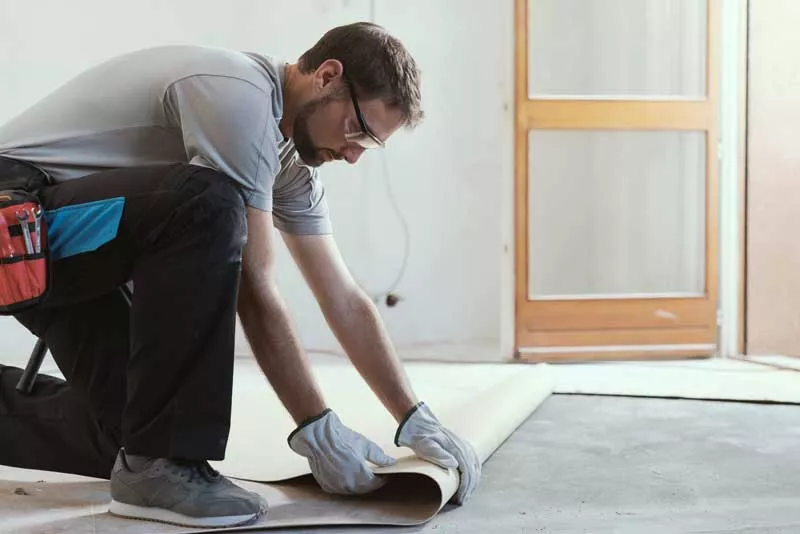
There are a handful of flooring types that work well with many underfloor heating options, and we’re going to explore each of them in detail in the following sections:
Carpet flooring is ideal if you have an electric or hot water underfloor heating system. Most of the time, homeowners like to use foil heaters with carpet flooring or similarly carpet tiles.
A foil heater consists of a thin multi-strand that’s fully enclosed with a fibre-reinforced foil, in addition to a fluoropolymer-insulated, dual-core heating cable.
The system integrates a flat aluminium foil that barely raises the floor, and that’s exactly why it’s perfect for floating floors. It’s also worth noting that the foil is fully buried into the ground. This allows for a continuous earth layer while also letting the foil function as a heat diffuser that draws the heat from the heating cable.
There are many perks of using this type of flooring with underfloor heating systems, which include:
However, there are a couple of things you need to keep in mind when setting up a foil heater with carpet flooring.
First, you need to make sure there’s sufficient insulation in the concrete base that the heating system will be installed on for it to work efficiently. You can use some insulation boards for that purpose.
What’s more, your carpet flooring should have minimal heat resistance for you to get the most out of your underfloor heating system. You should also factor in the thermal resistance of the underlay if you’re going to use it in the first place. Furthermore ensuring your carpet is fitted correctly is essential to keeping heat in. Be sure your measure for your carpet correctly.
Additionally, ensure that the flooring’s overall tog value is no more than 2 tog.
While wood flooring isn’t the best option for underfloor heating systems, it’s far from the worst. You should be able to use wood flooring with underfloor heaters while keeping some considerations in mind.
For instance, you’ll need to keep the heating system working for a longer time and at warmer temperatures to get the same results that you’d get with other types of flooring. This won’t only overwork your system and cause maintenance issues in the long run but also raise the monthly energy bills quite noticeably.
On a side note, there’s a threshold for the maximum temperature that you can put your system on with wood flooring installed. Too much heat will increase moisture levels in the wood, causing it to flex. Typically, you need to keep the temperature colder than 27 degrees Celsius.
If you do decide to opt for wood flooring, your best bet is to get engineered wood flooring. Engineered wood flooring has excellent conductivity while also being thick enough to add a touch of luxury to the place. Not to mention, it can withstand fluctuations in temperature much better than regular wood flooring.
Laminate flooring is a great alternative to wooden flooring. It mimics the looks of wooden flooring while overcoming some of the challenges that make it not very suitable for underfloor heating. It’s usually used with both wet and electric underfloor heating systems.
Laminate flooring integrates several layers that include a high-density fibreboard along with two additional layers for protection and luxury looks.
On top of that, laminate flooring offers tremendous wear and tear resistance while also providing better heat tolerance than wood flooring or even engineered wood flooring.
You can use underfloor heating with laminate flooring without worrying about flexing or other problems related to temperature changes. However, keep in mind that laminate flooring may be prone to buckling, so you must leave an expansion gap around the flooring to prevent this problem.
Just like engineered wood flooring, the maximum underfloor heating temperature for laminate flooring is 27 degrees Celsius. It’s also recommended that you start with a cold temperature and slowly increase the temperature by around 4-5 degrees every day.
Moreover, make sure that the laminate flooring thickness is no more than 17 mm to allow for maximum heat conductivity.
As for installation, there are two ways to fix laminate flooring, which include:

Ceramic tiles and stone are one of the best floorings for underfloor heating, thanks to their exceptional heat conductivity properties.
Once you turn on your underfloor system in a room with ceramic tile and stone flooring, you’ll notice that it has gotten much warmer within a few minutes. Plus, ceramic tiles and stone flaunt excellent wear resistance and keeping them in good condition is a breeze.
However, since heat builds up quickly in tile floorings, it also dissipates quickly, so once you turn off the underfloor heating system, the place will quickly revert to the environmental temperature.
Ceramic tiles can withstand a temperature of up to 29 degrees Celsius, which is at least a few degrees higher than many other flooring choices. Ceramic tile and stone floorings are capable of generating a heat output of up to 200W/m². Not to mention, they aren’t negatively affected by temperature fluctuations, so no need to worry about cracks or buckling.
Moreover, tile and stone floorings are pretty cheap, so you don’t need to spend a fortune to get the most out of your UHF. Let alone, they’re easy to clean and maintain.
Lastly, mortar is used to fix ceramic tiles. It’s spread with a tile trowel to cover an area that’s slightly larger than the size of the tile.
Vinyl, linoleum and luxury vinyl tiles (LVT) floorings are relatively less common than other types of floorings. They look great, no doubt about that, but how do they fare with underfloor heating systems? Before we get into that, let’s find out what these floorings are made of.
Vinyl is made of a blend of resin and a wide range of stabilisers and plasticisers. On the other hand, linoleum consists of natural materials that include natural mineral pigments, linseed limestone, wood flour, tree rosin, jute, and many more. A canvas backing is also used to add strength to the formula.
Since vinyl and linoleum floorings aren’t that popular, to begin with, many people don’t know whether it’s OK to use them with underfloor heating systems or not.
The short answer is that they’re definitely suitable for such systems. There are some limitations, though, like the fact that these floorings shouldn’t exceed a temperature of 26-27 degrees Celsius.
Vinyl floorings are pretty slim, meaning that they won’t obstruct heat flow from the underfloor heating system to the room. However, it’d be best if you made sure that the property is adequately insulated to minimise heat losses. After all, you can’t use the UHF at high temperatures, so you need to compensate for it somehow.
Before installing vinyl or linoleum flooring, make sure that it was unwrapped for 18-24 hours.
Polished screed is a synthetic resin flooring that offers a good level of durability while giving a modern look to the place. It’s also pretty easy to clean and has an adequate level of wear resistance.
Just like other synthetic resin floorings, polished screed floorings typically sport a thickness that can be anywhere from 0.15 mm all the way up to 6 mm. The exact thickness depends on the application. For example, polished screed flooring used in a commercial building will likely be thicker than that used in a home.
If you’re renovating a property and want to install polished screed flooring, it’s highly recommended that you opt for an underfloor heating system that has a glass fibre rendering mesh. This design feature will make it less likely for stress fractures to develop in the flooring.
On the other hand, if it’s a new build, the system will be integrated into the screed subfloor, so no need for any special adjustments here.
Polished screed floorings offer better thermal conductivity than floorings like hardwood and carpet, a key feature for a UHF.
Rubber flooring (often used as safety flooring) is an excellent choice for places that are exposed to heavy use. These include home gyms, workshops, playgrounds and pet shelters.
However, installing a UHF under rubber flooring may be a bad idea. It’s not entirely impossible; it’s just that you won’t really benefit much from the installed system.
So, why is that? Well, for starters, rubber floorings may release a “chemical smell” when heated, which can be intolerable for people with allergies. Another concern is that rubber floorings are prone to contracting and extracting with fluctuating temperatures, which may damage them.
It’s also worth mentioning that rubber is more of a heat insulator than a conductor, so a UHF that’s insulated with rubber flooring won’t be that useful.

As a general rule of thumb, you need to wait for around a week before turning on underfloor heating after laying the flooring. However, you may activate it for a few minutes after installation to ensure that everything is working as it should.
It’s also recommended that you start with a cold temperature and increase it by a few degrees every day. You can use a floor temperature sensor to keep track of the temperature.
Yes, you can put a rug on a floor with underfloor heating, albeit with some restrictions. When you place a rug on a heated floor, you’re essentially adding an extra layer for the heating system to get through, making it work harder. This could result in a slight decline in the amount of heat you feel in the room.
However, you can minimise these effects by choosing the right type of rugs to use with your underfloor heating system. Things like rug material, thickness, and length can all make a huge difference here.
Also, keep in mind that not all rugs are suitable for all floor types. In fact, placing a carpet on top of a floor with underfloor heating may cause the floor to wear out prematurely.
Now, here’s a quick overview of the rug features that you need to pay close attention to:
As you might’ve guessed, thick rugs will increase the insulation of the flooring, causing the underfloor heating to struggle. Your best bet would be to choose a rug with a tog of 2.5 or less to have the most efficient underfloor heating system.
Rug length can dramatically impact the performance of your underfloor heating system.
If you put a 20x40 cm rug on a 500x450 cm floor, it’ll barely affect the amount of heat that passes through the floor. On the other hand, covering a big portion of the floor with a rug means that less heat will pass through, especially if the rug is too thick.
When shopping for a rug to use with your underfloor heating system, make sure you pick one that’s made of natural materials instead of synthetic ones. Synthetic materials, like nylon and polyester, have poor heat tolerance, meaning that you’ll likely damage a rug made of one of these materials if you put it on a heated floor.
On the flip side, natural materials like wool do a much better job at holding and transferring heat, making them a favourable choice for rooms with underfloor heating.
It depends on what type of underfloor heating you have. For example, if you use Forced Air or Hydronic underfloor heating, opt for an underlay that has a tog rating of no more than 1.0.
One good type of underlay to use here is Duralay Heatflow. It has a meagre tog rating, making it ideal for underfloor heating systems. You could also install a Tredaire King underlay if you have carpets on the floor.
On the other hand, it’s not recommended to use an underlay with electric underfloor heating systems, simply because the heating element is installed on the subfloor. An underlay with this type of underfloor heating will render the system useless.
What type of flooring can be used with underfloor heating? There are a lot of varieties! The ones with the least thermal resistance are ceramic tile and stone floorings. These types of flooring will have good heat conductivity properties and will therefore give a good underfloor heating experience. However, we know that ceramic tile and stone flooring is not everyone’s cup of tea. In that case there are many other types of flooring that have been designed with underfloor heating in mind. This means generally, you can choose the flooring you like and that works best for your property as opposed to just basing your decision on flooring with the least thermal resistance. Before you do buy any flooring, always make sure you consult with a professional flooring company first so they can give you the right advice.
On the other side of the coin, try to avoid rubber floorings. This is probably the worst type of flooring to use with underfloor heating systems. Rubber is a heat insulator, so it doesn’t make much sense to use it.
Floor cleaning tips and tricks are essential to know for every homeowner. Technically, we all know how cleaning works in the basic sense of the word. Yet, understanding the details and differences between floor types and floor cleaning methods makes all the difference.
Floors are made of different materials, have different textures, and react uniquely to store-bought and DIY cleaners, which is why we had to compile our research into one article for any beginner in the world of floor cleaning and maintenance. So, if you're interested in learning how to clean floors properly, continue reading.
Do you ever stop to consider the cleanliness of your floor (or lack of it)? Cleaning floors is a tiring chore that many people skip or don't put much thought into. But, like anything in your house, it needs looking after.
Most people only acknowledge that a place needs cleaning when dirt starts piling up on furniture, utterly oblivious to how quickly the floors get dirty in comparison.
In fact, whenever we clean our furniture, the floors need extra care because we've transferred dirt from all surfaces to the ground. Since floors often take a beating from our daily lives, cleaning them isn't as simple as mopping them with soapy water occasionally.
In addition, every type of floor requires a different level of care. You can't use the same cleaning solutions or products and mops to clean every kind of floor you have. So, it's crucial to learn how to mop a floor correctly and the right products to use for each floor type.
The buildup of dust, dirt, and sand ruins the look of your house. Also, the stains and spilt liquids you don't clean immediately contribute to this, making it look forever unclean. So, it comes as no surprise that cleaning the floor regularly will leave it looking its best.
Cleaning the floor regularly and meticulously will also save it from structural damage. If you want the flooring to last long, take care of it, especially if you're looking to save money. All the money you spent on the flooring will go to waste if you don't maintain it.
More importantly, the amount of money you'll spend on cleaning products or homemade solutions is nothing compared to replacing the damaged flooring.
Plus, if you want to protect yourself and your household from getting an allergic reaction, cleaning the floor regularly will remove pollen, dust, and other allergens.

The best way to clean and maintain the floor is by understanding what it needs and sticking to a routine. Undoubtedly, different types of flooring can't be treated the same.
For example, carpets need a lot of maintenance because they gather a lot of stuff. Wood floors require a different treatment from laminate, vinyl, and stone floors. Some floors look their best after using vinegar or lemon juice, while other types could be damaged. Milk is a good idea for some floors, but terrible for others, and so on.
To take the guesswork out of your next cleaning spree, we've gathered information about how to clean really dirty floors according to their type.
Carpets are challenging to clean because of their size and porous nature that attracts filth. Unclean carpets can house dust mites and bugs, according to the British Lung Foundation (BLF). Yet, they're not like beddings that you can just toss in the washing machine.
One of the solutions that the BLF suggests is vacuum cleaning. You need to do it often due to the porous nature of carpets. So, make it a habit to vacuum your carpet at least once a week.
In addition, you need to vacuum carpets right by using a vacuum that your carpet can handle. Some carpets are notably more delicate than others, which you need to keep in mind. Don't forget to utilize the vacuum attachments, as they help you get to the hard-to-reach places and remove trapped dirt more efficiently.
Also, as tempting as it would be, don't rush vacuuming so that the machine can pick up everything. Instead, try to vacuum slowly in a specific pattern. Then, vacuum in reverse to leave the carpet uniform-looking. It's also essential to take your time while deep cleaning the carpet, which you should do once every six months.
Plus, consider having a small decorative rug over the carpet to protect it against some of the wear and tear. Immediately replace your outdoor shoes with indoor slippers once you get home to avoid tracking bacteria and dirt inside, and wipe your feet too.
Lockdown has inspired many people to redesign their rooms, which we definitely recommend so that the carpet doesn't get indentations. Stretching out the carpet will also remove the wrinkles and remove dirt from uneven areas.
We also recommend installing curtains or blinds to protect the carpet from UV rays. Not to mention, changing the air filters of your HVAC system will keep the carpet cleaner for longer and repel dust and dirt.
If you have carpets at home, it's a no-brainer to have a lint roller at hand to remove your pet's hair or your own. Using a squeegee for pet hair also works wonderfully.
We all spill liquids on our carpets, which is okay. What matters is that you clean it immediately before it stains and use a stain remover that's specifically made for carpets. So, leave the laundry products for laundry.
If the carpet's already stained, clean it with an iron. Saturate the stain with a soapy water solution, then place a towel on top of the stain. Turn on the iron and put it on the towel, running it back and forth over the stain for 15 seconds. After the stain transfers to the towel, remove it and rub the area. Never blot. Finally, use a hairdryer to dry the area.
Baking soda is the perfect way to freshen up the carpet and a helpful solution to stubborn oil stains. After dabbing the excess moisture away, coat the stain with baking soda for up to six hours. Then, vacuum the area. This method also works for pet accidents, but add in some vinegar with the baking soda to neutralise the smell.
We also recommend using plain, white shaving cream as a DIY cleaner for various liquid stains and rubbing alcohol on spilt nail polish.

Although laminate resembles hardwood, it's not as tough. So, don't drag furniture over it. Instead, you can put soft castors under table legs and chairs to avoid scratching and denting your laminate flooring. Also, never use a scouring pad or any abrasive implement to clean it.
We highly recommend referring to the manufacturer's instructions to know which cleaning products to use without damaging the floor. Note that laminate doesn't like a soaking wet mop because it isn't waterproof, which might bring you to ask how to clean floor with vinegar instead.
Mix vinegar with a gallon of warm water to make the best floor cleaning solution. Then, use a well-wrung mop to clean the floor.
The best way to clean floors without a mop is by running a damp cloth over them, especially when you spill on a laminate floor. However, if you have intensive cleaning needs, get a floor cloth with a specialist cleaning fluid or a microfibre mop after squeezing the water out of it.
It would help if you also kept the laminate floor dirt and dust-free. And a doormat is helpful for that. Vacuum or sweep away the loose dirt with a soft broom. Also, handle stones and gravel carefully, as they can scratch the laminate flooring.
Wood is one of the most common choices for flooring among homeowners. However, it only lasts if you take good care of it. Start by investing in furniture pads to protect the wood.
Keep it dust-free by sweeping or dusting daily. You can do it while you're on the phone or boiling tea. Also, make it a habit to vacuum the floor once a week. What matters is that you keep it as clean as possible.
Also, if you spill anything, clean it immediately. The best way to clean floors by hand is using a damp microfibre cloth, as a wet mop can cause water damage. Water damage warps and swells the floor, which is the last thing you need. If you really have to use a mop, make sure it's barely damp and well-wrung.
In addition, use a wood floor cleaner once a month for a clean, polished look, and don't forget to read the instructions beforehand.
As time goes by, the finish of your wood floor will naturally look dull. But you can refinish the floor every three to five years to restore it to its former glory.
Cleaning and maintaining vinyl floors isn't rocket science as you'll see. Like any other floor, you should regularly sweep or vacuum it. If you're going to sweep it, use a soft broom to protect it from scratching. For vacuuming, adjust it to the "bare floor" setting so that it glides smoothly over the floor. Also, get a doormat to avoid tracking outside dirt.
In addition, you'll have to learn low-impact cleaning techniques, so forget drenching the floor in water. Instead, get a cleaning solution specifically made for vinyl floors. And never use wax-based or oil-based cleaners on vinyl.
Another suggestion would be to use shampoo and water as a DIY cleaner. For another DIY solution, in a spray bottle, mix 1/4 cup vinegar with a drop of dish soap in lukewarm water.
Like wood and laminate, vinyl doesn't like water. So, whatever cleaner you pick, you'll have to employ the spritz-and-dry mop technique. First, spray the solution in one section. Then, immediately wipe it with a slightly damp microfibre mop. After, rinse well to avoid leaving residue behind. More importantly, dry it well to keep the water damage away.
If you ever spill, you'll have to clean it immediately because vinyl floor is the kind of floor that'll remind you of your mistakes. A food stain? Clean it with baking soda.
However, if there's a greasy mess, rubbing alcohol on it will take care of the grease. You can also tackle scuffs with a soapy water solution and a dry microfibre cloth, but remember not to rub too hard.

Stone is the most beautiful flooring you'll ever have, but its beauty comes at a price. It needs research and effort on your end. That's why homeowners that are always on the go usually avoid it.
Let's start with the easy stuff. Of course, you'll sweep or vacuum it regularly to keep the dust at bay, which is the best way to maintain a fully sealed stone floor.
Unlike most floor types that we've discussed, all-purpose cleaners and random DIY solutions are a no-no. For example, vinegar and lemon juice actually damage stone floors.
If you'd like to make a DIY cleaner, we recommend cleaning the floor with skimmed milk, which has been popular for a while. What about store-bought products? Get an easy-to-use, specialist, water-based product that'll work on sealed or unsealed stone floors.
Regardless of your cleaner of choice, try not to mop every day. Perhaps keep mopping to once or twice a week maximum. When you do mop, don't use too much water. Also, avoid scrubbing brushes, as they can hurt stone floors unnecessarily.
Use a floor mop or sponge with a suitable cleaning product. And follow the product's instructions. If you're using milk, work it over the stone floor; then, leave it for 15 minutes. Rinse, and dry the floor thoroughly with a soft cloth after you finish cleaning.
When it comes to spills, you'll need to blot and wipe them up quickly. Also, use a specialist cleaner to handle inappropriate marks and staining, and follow its directions. Generally, you'll let the cleaner set into the floor for some time, work it into the floor, then rinse it.
That being said, no matter how much effort you exert in cleaning the stains, the stone floor will need re-sealing every couple of years for maximum protection against future stains, humidity, and high foot traffic.
Artificial grass brings life to your space without the hassle of natural grass. When you think about it, artificial grass is the only kind of turf that you never have to cut or mow again! Accordingly, you'll save a lot of time, money, and water as well. This low-maintenance nature of artificial grass has contributed to its popularity in the United Kingdom.
Nonetheless, you still have to take care of it so that it looks fresh all the time. A monthly light maintenance goes a long way. Furthermore, artificial grass needs brushing once a week or every other week. The ideal brush for this task is a medium, soft bristle brush. When you use it, try to brush in the opposite direction of the artificial fibres.
Also, if leaves get on the artificial turf, you can get rid of them with a blower. Dry leaves are easier to blow away than wet ones, so bear that in mind. If the turf ever stains, you can just clean it with soapy water.
Try to protect the grass from sharp objects that can cut it, such as broken glass, stiletto shoes, and football studded boots. Moreover, keep the artificial turf away from adhesives and any sources of heat. Finally, watch out for your dog if it likes to chew on grass as well.
Many people love to have bamboo flooring because of how hardy the plant is. It's as durable as hardwood and more water-resistant than most types of wood floors. Also, the sustainable nature of the plant renders it a must-have for the eco-friendly.
However, its hardiness doesn't change the fact that you still have to learn a few things about how to clean and care for it.
First things first, bamboo flooring scratches easily. So, felt pads are recommended for furniture. In addition, remember to lift heavy objects when moving them on bamboo floors.
Also, they need daily sweeping to remove dust and dirt, which you should do using only a soft-bristle or fine-fibre broom. And don't vacuum unless your vacuum cleaner has a setting that caters explicitly to wood floors.
Doormats are a no-brainer to keep your outside business outside. And you can go a step further by removing your outdoor footwear to keep your bamboo clean.
Like stone, bamboo doesn't like vinegar or any acidic cleaners. Instead, it prefers a pH-neutral wood floor cleaner. So, say goodbye to abrasive cleaning products, wax, and furniture polish.
Another suitable choice would be mild soap. Mix your cleaner of choice with water. And wring your microfibre mop to the maximum. Also, ditch the steam mop when it comes to bamboo floors. Wipe the floor dry with a dry cloth.
As for spills, you should wipe them instantly with a microfibre cloth and a pH-neutral cleaner.
Like bamboo, cork is a tough type of wood that's growing in popularity. It's a relatively low-maintenance flooring type that's also good for the environment.
That being said, you should still learn more about it to know how to take care of it. Cork needs protection from two things: scratching and UV rays.
You can protect it from scratches by installing protectors everywhere you'll need them, such as under chairs and table legs. In addition, all heavy furniture should have felt pads or non-staining glides or casters.
And take care whenever you're moving appliances or large pieces of furniture around the floor. This is especially true for furniture with wheels because it'll need a mat underneath for extra protection. Also, don't let a ball of steel wool touch the floor.
Regarding UV rays, we highly recommend installing blinds or curtains because sunlight changes the colour of cork, a natural material.
To remove dirt and dust, vacuum the floor as needed. And get a doormat to avoid bringing outside dirt into your home.
When it comes to cleaning products, never reach for an ammonia-based cleaner when cleaning a cork floor. Instead, get a pH-balanced wood or cork cleaning agent, and mix it with water. Then, wring your mop until it's slightly damp, and start mopping. Last but not least, wipe the floor dry or leave it to air dry.
Ceramic is a popular choice for areas with high humidity and foot traffic. It has a higher resistance to the elements than most flooring types, so many prefer it over wood. Its nature makes it the ideal choice for kitchen and bathroom floors as well.
Like any other floor type, you'll need to clean up loose debris using a vacuum cleaner or broom. Doing so will prevent sand and grit from dulling the surface. It's also crucial to constantly watch the tiles for stains.
The best way to clean kitchen floors is by mixing any mild detergent with hot water. Ditch the sponge mop and use a string or strip mop instead. Wring, mop, and repeat. Remember to replace the water once it gets dirty. Mop one final time with water only to avoid any soap residue. After you finish, dry the floor with a cloth, or leave the room to air dry.
When it comes to cleaning tile grout, spray the grout with a grout cleaner or a hydrogen peroxide solution. Let the cleaner sit and work its magic for half an hour. Then, start scrubbing with a stiff brush until it's clean. Finally, mop the floor, and dry it.
By now, you should know how to clean and maintain different types of floors properly. Whether you have laminate, stone, or cork floors, they'll last longer if you know how to take care of them and follow our dos and don'ts. Not only will your floor look beautiful, but you'll also save a lot of money by increasing its longevity.