


(0)1622 589 999

info@allfloorstradecenter.co.uk


Kitchens are highly-practical spaces subject to rough conditions, including moisture from steam and spills, temperature variations, and high foot traffic. If you’re doing your kitchen floor, you should choose a flooring option that can handle moisture and is easy to clean and maintain, like LVT kitchen flooring.
It’s a solid solution if you’re struggling to decide on the best flooring option for your kitchen. Continue reading to learn everything you need to know about it and other flooring materials!

There are some general guidelines you should consider to keep your kitchen safe, and among them is flooring. Although your choice will differ depending on your budget, taste, and household needs, flooring materials must be:
Countless materials meet these criteria and are commonly used as kitchen flooring, including vinyl roll, ceramic tiles, luxury vinyl tile (LVT), and natural stone. However, LVT is a popular choice among homeowners for a few reasons.
LVT flooring is affordable, easy to maintain, aesthetically diverse, and more durable than vinyl rolls. They’re also easy to clean, moisture-resistant, and comfortable to walk on. And, with enough experience, you can install them yourself.
They come in various styles, including plank and tile, so you’re bound to find something that meets your preferences. However, it’s best to get high-quality vinyl to ensure the best resistance to foot traffic, stains, and moisture.
It’s critical to ensure the safety of your kitchen if it isn’t just a place for cooking and cleaning but also serves as a space for gathering, dining, and relaxing with your friends and family.
Kitchen floorings have varying qualities, but it’s best to invest in something that’ll prevent potential accidents. Look for the following:
LVT floors have vinyl finishes that make them comfortable to walk on and a safe solution to your kitchen flooring. Since they’re water and slip-resistant, they can withstand any spillage and ensure you have a secure footing while walking around. They’re also easy to clean and maintain, so hygiene shouldn’t be a concern.
If you opt for ceramic or porcelain tiles or natural stone, keep in mind that they become very slippery when wet, and it’s best to hire a professional to install them. And while they’re easy to clean and resistant to your kitchen’s rough conditions, they may have some disadvantages.
Grime and dust can build up between splits and uneven surfaces of tiles, and natural stone can be uncomfortable to stand on barefoot for extended periods due to its hardness. It can also absorb liquids and crack over time if not properly sealed.
There are also a few other notable materials, including engineered wood, polished concrete, and cork. They all are suitable flooring materials but also come with advantages and disadvantages. So, assess your situation to determine what’s best for you.
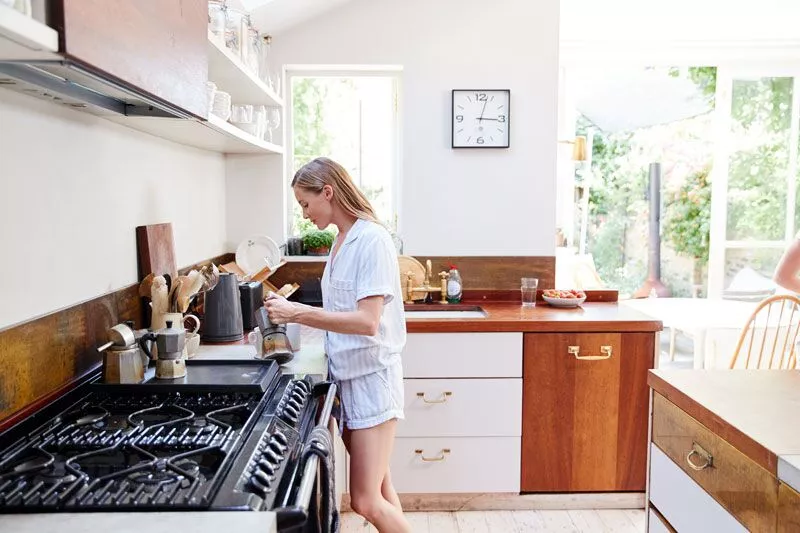
Continue reading if LVT is your kitchen floor material of choice and you need some inspiration to turn your kitchen into the envy of your guests. Whether you’re a modern minimalist or a lover of pretty patterns, we’ve got you covered!
Harvey Maria is a luxury flooring brand known for elegant and durable kitchen flooring options. It offers luxurious vinyl tile and rubber flooring for homeowners seeking to create a stylish yet hard-wearing environment safe for cooking, cleaning, and relaxing with family and friends.
The vinyl tiles are engineered to be slip-resistant, easy to clean, and family-safe. They also come in various colours and designs and can even mimic the look of natural materials like wood and stone to ensure you’re aesthetically pleased.
Opting for a bold monochrome design will help you achieve a stylish yet minimalistic design for your kitchen. It combines white and black vinyl tiles in a sophisticated and elegant manner that showcases your attention-grabbing taste and makes your kitchen look more spacious.
Here are some designs you can play around with if you’re looking to make a lasting impression on your guests:
There are countless pretty patterns to choose from to floor your kitchen. LVT come in many shapes and designs to suit your taste, so you can mimic the look of high-end materials, such as stone and wood, while ensuring your floor is family-safe and easy to maintain.
You can experiment with a basketweave pattern using rustic, earthy colours for a farmhouse-style kitchen. Or you can opt for a neutral-tone lattice pattern to give your kitchen a touch of elegance and sophistication. Your options are unlimited!
You can never go wrong with a classic checkerboard design. It’s a simple yet timeless design in which you alternate black and white tiles to achieve a chessboard-like look. You can use it in any kitchen since its versatility can complement any colour and design scheme you follow. Moreover, it adds depth to your kitchen, making it look more spacious than it is.
It’s also practical for busy spaces like kitchens. The tiles are easy to clean and maintain and can easily disguise stains and spills, making them look cleaner for longer.
There are a few materials we strongly recommend against using in your kitchen flooring, and for good reasons.
Solid wood is the first material that comes to mind. Natural wood can’t withstand the frequent temperature and moisture changes in your kitchen. Since it’s porous, it’ll absorb moisture and water and crack, lose its colour, and warp over time. Furthermore, it’s not resistant to scratches and stains.
Although many types of wood have antibacterial properties, they can lose them when worn due to their porous nature. Worn wood can trap bacteria and harmful substances and prevent you from keeping your kitchen clean and safe. It’s also expensive to repair or replace.
As such, if you want to go for a wooden kitchen floor, opt for engineered wood.
Laminate is another flooring option we recommend against using in your kitchen. While it’s a cost-effective option for other parts of the house, it’s less durable and resistant than other materials, making it an unpractical choice for kitchens.
Laminate is a synthetic material made of several layers. If water seeps through its seams, those layers can easily separate, warp, or buckle over time. Additionally, it can’t withstand high foot traffic and may dent if you drop something heavy on it.
Finally, while carpet can be a comfortable choice for flooring in other rooms, it’s generally not practical for kitchens. It’s not designed to withstand the wear and tear of busy spaces and can become stained or damaged by moisture and spillage. It’s also challenging to clean and maintain and can trap bacteria, which can pose a health risk over time.
When choosing a kitchen flooring material, it’s best to opt for a material that can withstand temperature, moisture changes, and high traffic, like LVT floors.
LVT floors come in various patterns and colours to satisfy every taste, and they’ll last for a long time without showing signs of wear.
If you decide to install them, get in touch with us now!